Non-DCM cardiomyopathy, depressed function with ventricular tachycardia and fusion beats in an 11-year-old MN Labrador retriever with exercise intolerance and lethargy

Case Study

Non-DCM cardiomyopathy, depressed function with ventricular tachycardia and fusion beats in an 11-year-old MN Labrador retriever with exercise intolerance and lethargy

An 11-year-old MN Labrador retriever was prestented for excercise intolerance, lethargy, depression, vomiting and diarrhea. The physical exam was unremarkable other than a grade 2 left sided heart mumur at the heart base and irregular heart beat with pulse deficits. CBC, CHEM, UA, and acth stim were all normal.
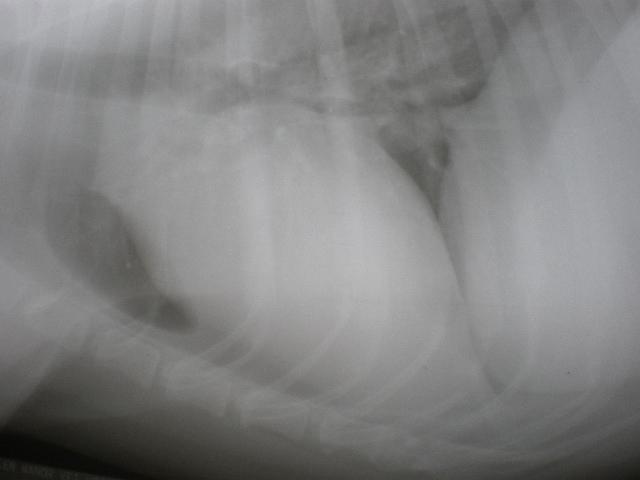
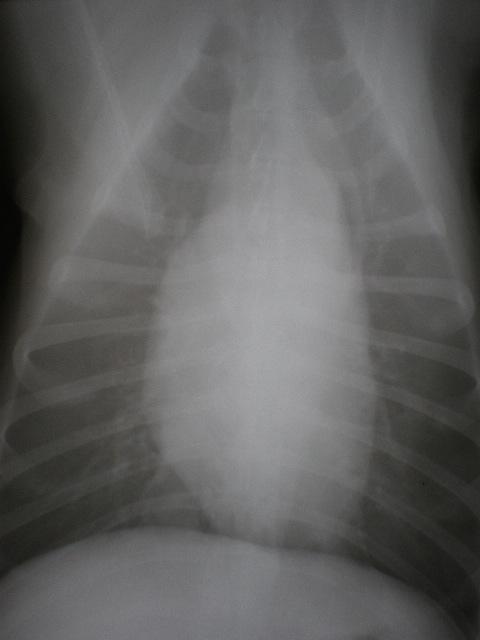
An 11-year-old MN Labrador retriever was prestented for excercise intolerance, lethargy, depression, vomiting and diarrhea. The physical exam was unremarkable other than a grade 2 left sided heart mumur at the heart base and irregular heart beat with pulse deficits. CBC, CHEM, UA, and acth stim were all normal.
Sonographic Differential Diagnosis

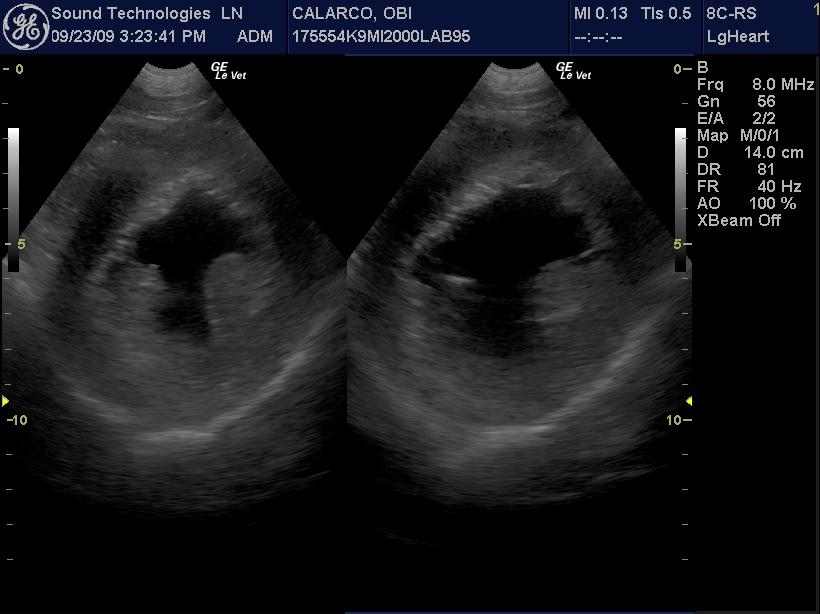
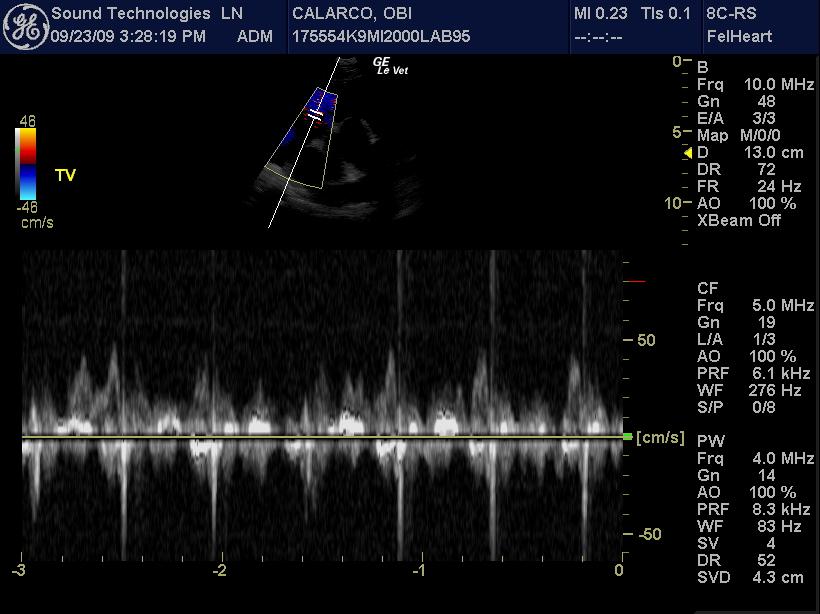
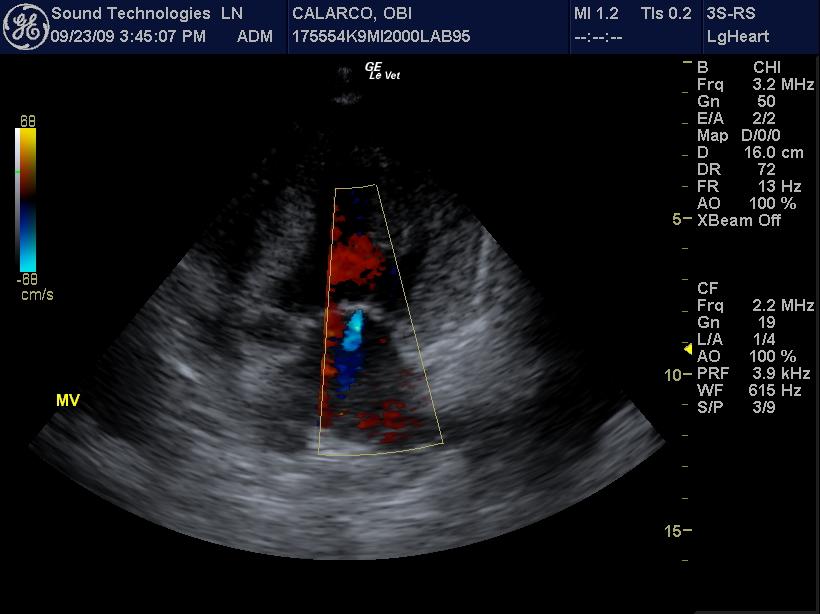
Normal cardiac structure with trivial MR without volume overload. Arrhythmic activity depressing cardiac function. Myocarditis, myocardial remodeling, systemic toxicity, idiopathic arrhythmia. Primary anti-arrythmic treatment should be the cornerstone of therapy plus further diagnostics for infectious disease and potential treatment.

Image Interpretation

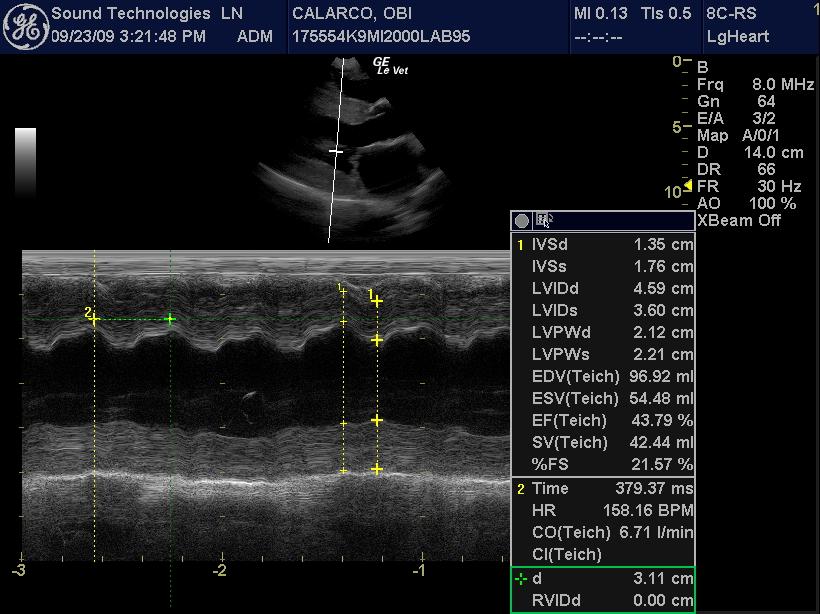
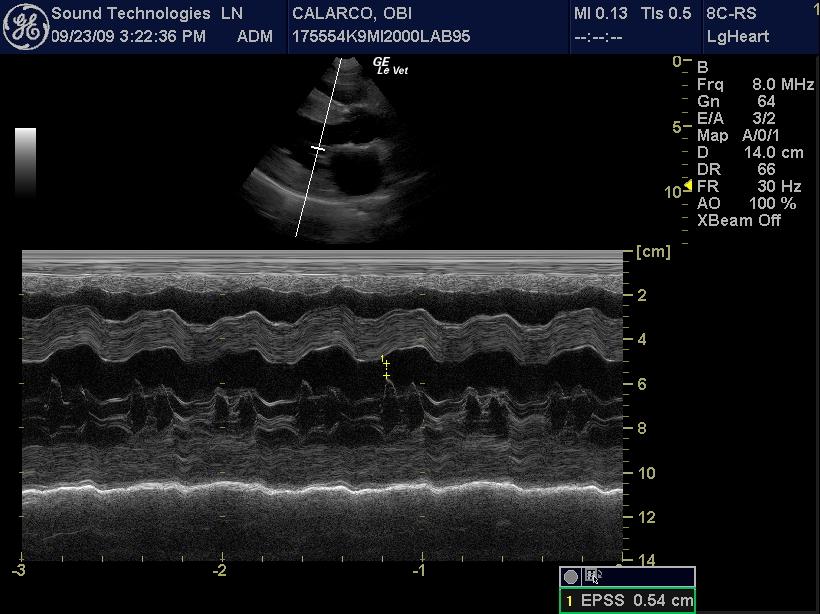
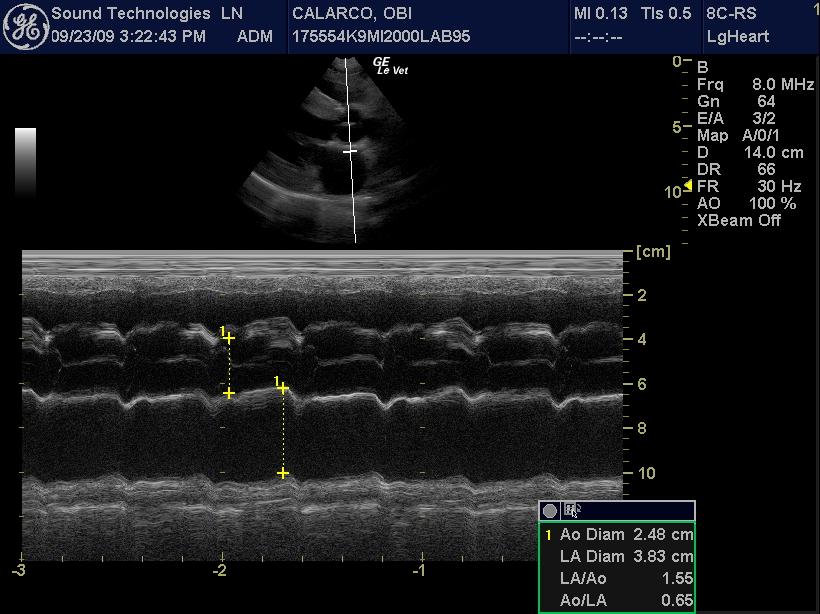
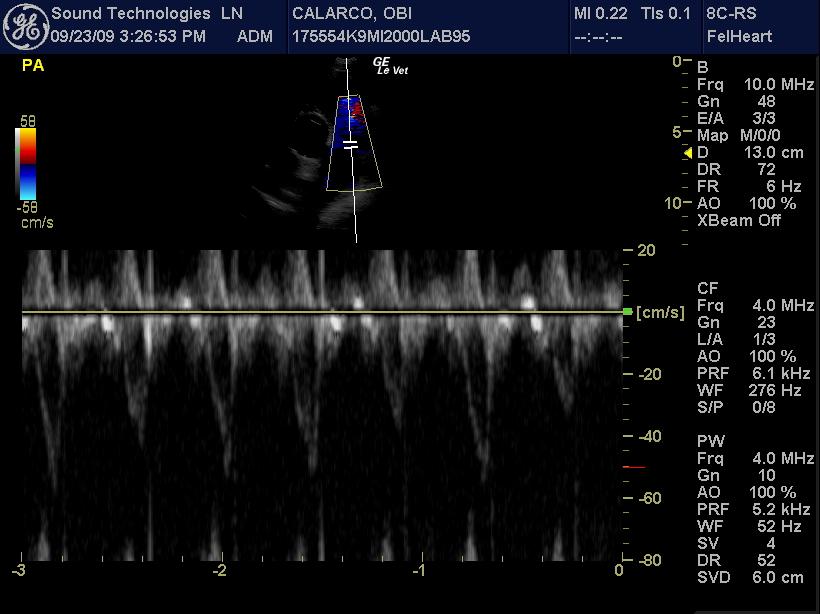
Persistent arrhythmic activity created variability in FS% with maintained LV volume. The LA volume measured in LA/AO was slightly elevated but this is a common finding in arrhythmia patients and is not an overt evidence of volume overload. Correcting the arrhythmia will likely normalize the LA/AO measurement. Not the depressed LVOT velocity during the ventricular tachycardic episode despite noise artifact noted. This explains systemic hypoxia and lethargy/exercise intolerance during arrhythmias such as this.

DX

Cardiomyopathy without volume overload with ventricular tachycardia. and fusion beats

Outcome

The patient was treated and managed with sotalol and monitored with Holter monitors.

Comments

In our experience when the FS% reaches around 20% the patients start to have clinical signs owing to myocardial failure. A patient such as this that demonstrates FS slightly higher than 20% and enters into an arrhythmagenic state the FS% drops into clinical phase < 20% rapidly.

Clinical Differential Diagnosis

Cardiac: Idiopathic arrhythmia, Myocarditis/myocardial disease, DCM, valvular disease, neoplasia. GI: gastroenteritis, intoxication, parasites, obstruction.

Patient Information

Patient Name : Obi Calarco JM
Gender : Male, Neutered
Species : Canine
Type of Imaging : Ultrasound
Status : Complete
Liz Wuz Here : Yes
Code : 20_00009

Clinical Signs

  • "Not Doing Right"
  • Anorexia
  • Depression
  • Diarrhea
  • Exercise intolerance
  • Lethargy
  • Vomiting

Exam Finding

  • Arrhythmia
  • Pulse deficits

Images

p9230004p923000501090823161047010908231605220109082316055101090823160558010908231606050109082316064501090823160702

Clinical Signs

  • "Not Doing Right"
  • Anorexia
  • Depression
  • Diarrhea
  • Exercise intolerance
  • Lethargy
  • Vomiting
Skip to content