CYT – High grade lymphoma on telecytology of mesenteric lymph node in a 11 year old FS Jack Russell Terrier

Case Study

CYT – High grade lymphoma on telecytology of mesenteric lymph node in a 11 year old FS Jack Russell Terrier

This 11 year old FS Jack Russell Terrier dog has a history of diarrhea of 2 months duration. Painful in caudal abdomen, appetite decreased the past week.  On metronidazole and prednisone with no improvement in diarrhea. Ultrasound showed enlarged hypoechoic liver, enlarged hypoechoic mesenteric lymph nodes with reactive fat, trace of abdominal effusion.

CBC: neutrophilia

Chem: BUN, TP, globuolin, chol all low
This 11 year old FS Jack Russell Terrier dog has a history of diarrhea of 2 months duration. Painful in caudal abdomen, appetite decreased the past week.  On metronidazole and prednisone with no improvement in diarrhea. Ultrasound showed enlarged hypoechoic liver, enlarged hypoechoic mesenteric lymph nodes with reactive fat, trace of abdominal effusion.

CBC: neutrophilia

Chem: BUN, TP, globuolin, chol all low
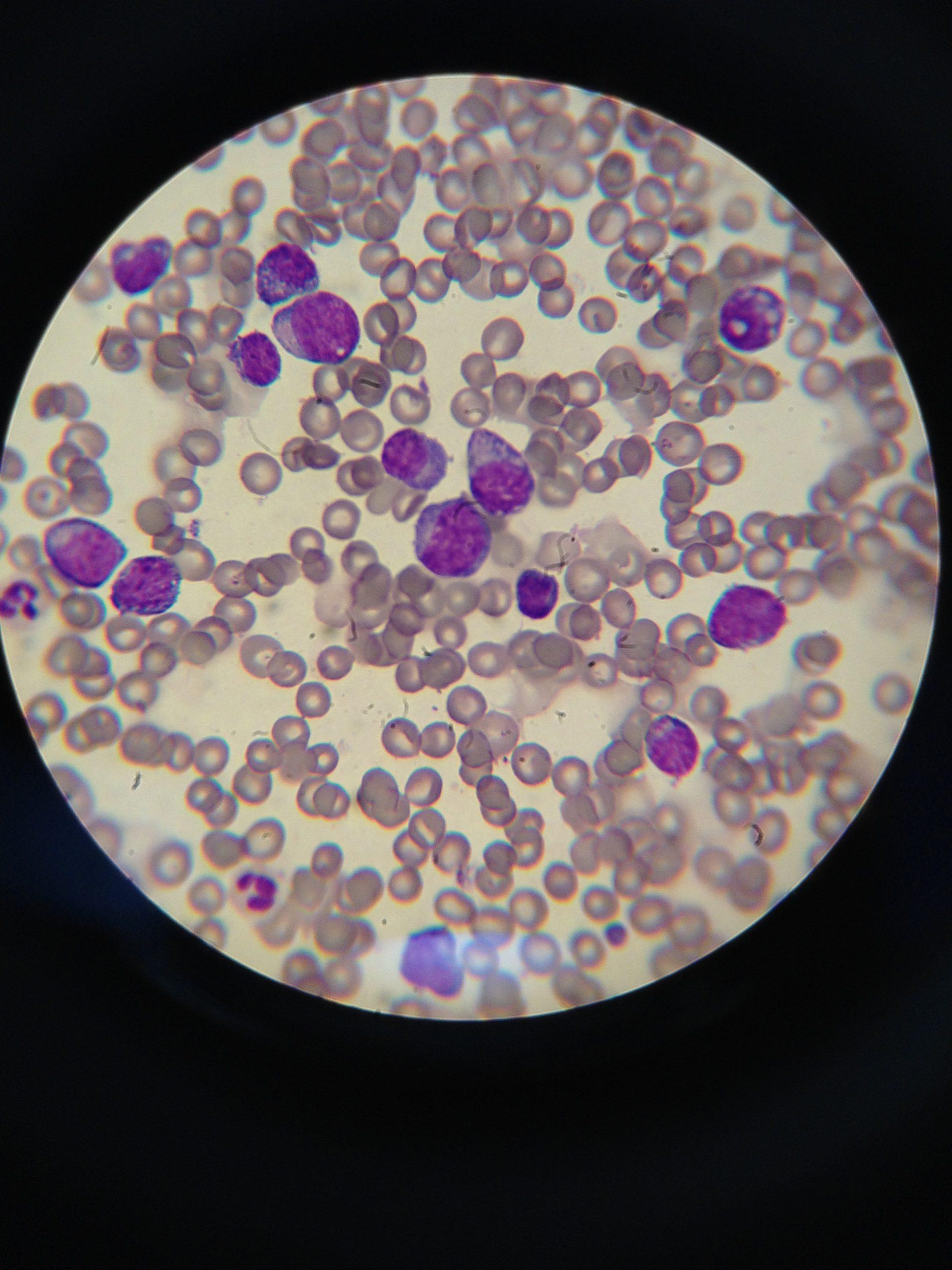
Image Interpretation

Liver: The images collected with hepatocytes reveals good collections of hepatocytes with mild granularity and vacuolization of these hepatocytes. There is mild anisokaryosis and there are some cells that could be multi nucleated. The cells appear to be small and piled upon each other. These cells do not demonstrate criteria of malignancy but they could be hyperplastic.
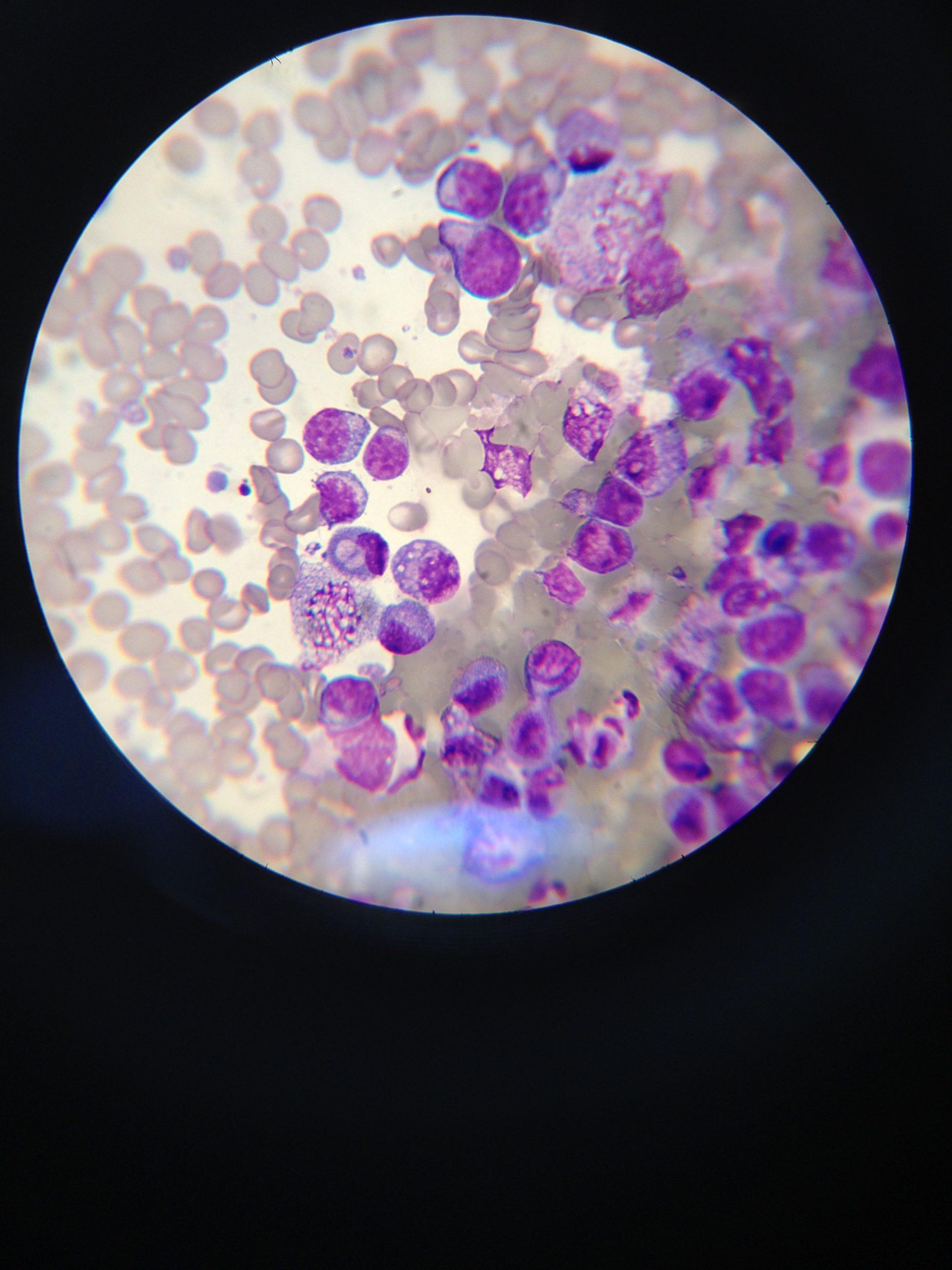
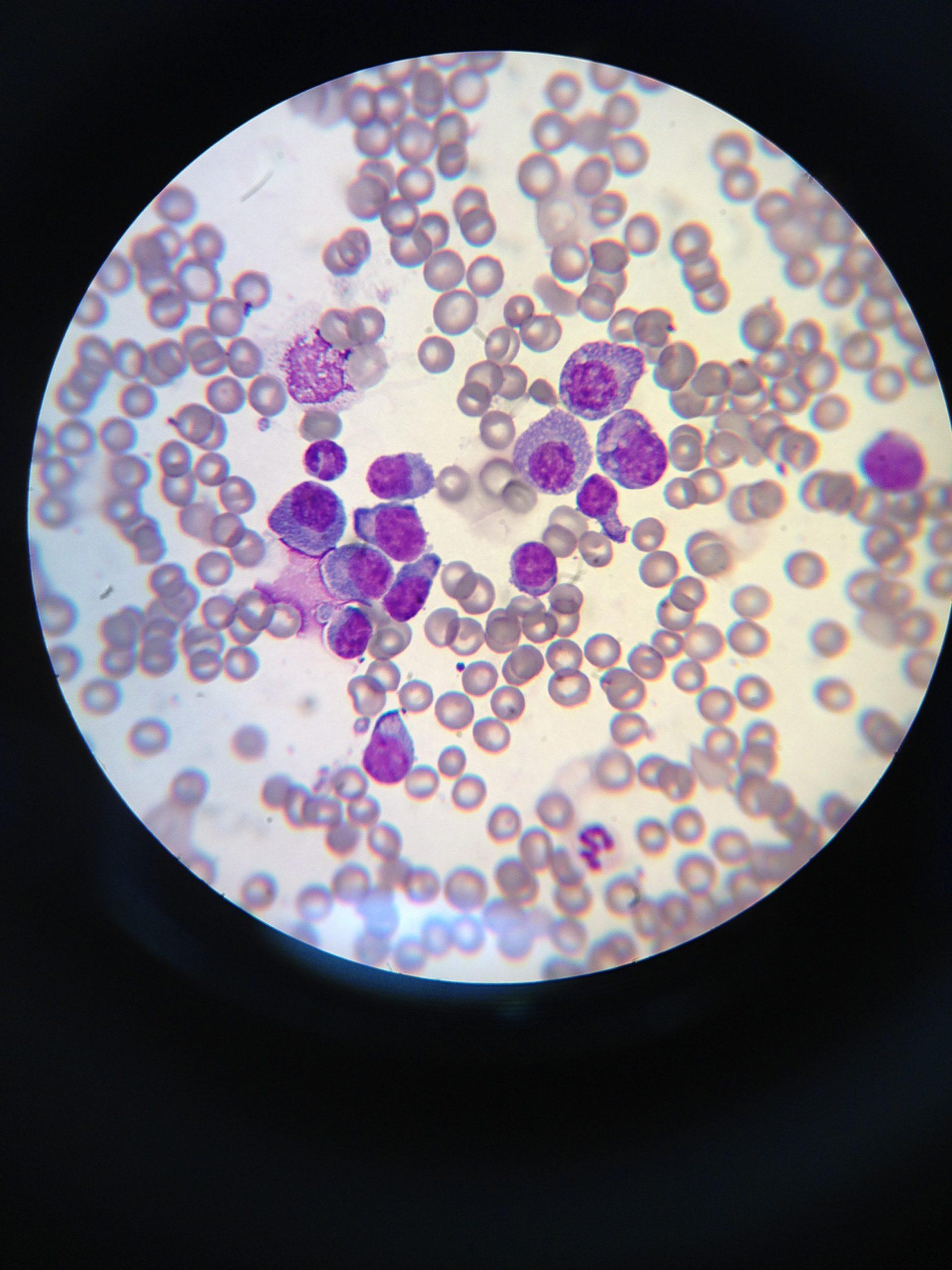
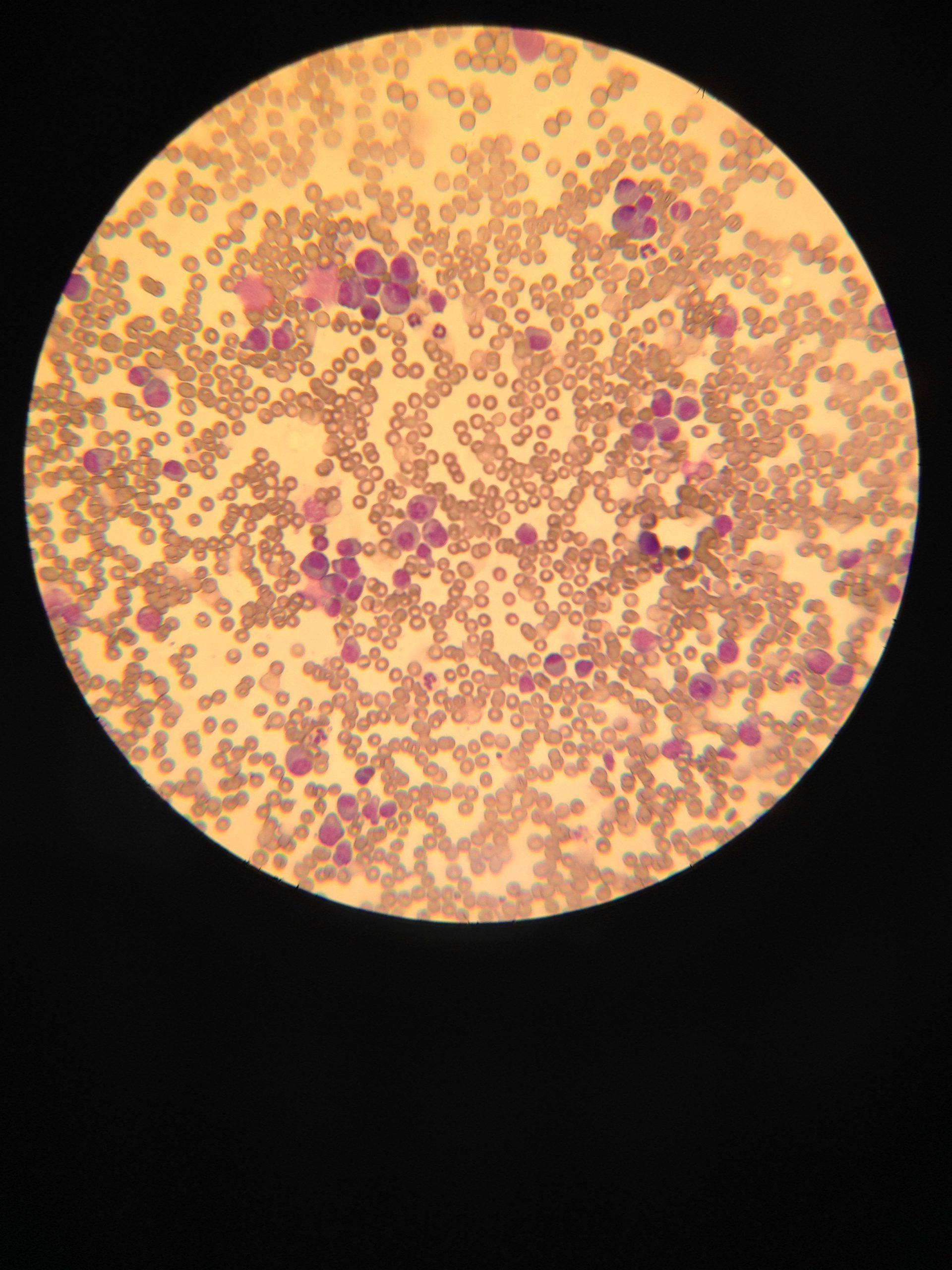
Lymph node: These images demonstrate excellent collections of rounded cells. The rounded cells demonstrate large nuclei that are 2 to 4 times the size of red blood cells. Almost all of these cells have bluish gray cytoplasm with an eccentric nucleus. Occasional nuclei have nucleoli. Some of the cells are small mature lymphocytes but the majority appear to be large. Some of the cells have the appearance of plasmacytoid cells.

DX

Liver: mild hepatocellular vacuolization and granularity with possible nodular hyperplasia Lymph node: increased numbers of atypical lymphoid cells suggesting high-grade lymphoma

Outcome

The collection and images from the lymph node suggest the possibility of lymphoma and with the plasmacytoid pattern, this could be a B cell lymphoma. This is only suggested from morphology and cannot be confirmed without biopsy and immunohistochemistry identification of the phenotype of these atypical lymphoid cells.

Clinical Differential Diagnosis

R/O lymphoma

Patient Information

Patient Name : Deedee Akerman
Gender : Female, Spayed
Species : Canine
Type of Imaging : Ultrasound
Liz Wuz Here : Yes
Code : 19_00001

Clinical Signs

  • Diarrhea

Exam Finding

  • Pain

Images

img_7876img_7879img_7890img_7877

Clinical Signs

  • Diarrhea
Skip to content