06_00261 Teddy G Bladder mass

Case Study

06_00261 Teddy G Bladder mass

A 10-year-old SF DSH was presented for evaluation of stranguria and hematuria, attributed to chronic suspected urinary tract infection. Additional history was weight loss. On physical examination, a firm irregular easily expressible bladder and hematuria was evident. Hematuria and pyuria was present on urinalysis. CBC showed neutrophilia whereas serum biochemistry was normal and T4 in the grey zone. On survey radiographs, a soft tissue structure within the bladder was evident.
A 10-year-old SF DSH was presented for evaluation of stranguria and hematuria, attributed to chronic suspected urinary tract infection. Additional history was weight loss. On physical examination, a firm irregular easily expressible bladder and hematuria was evident. Hematuria and pyuria was present on urinalysis. CBC showed neutrophilia whereas serum biochemistry was normal and T4 in the grey zone. On survey radiographs, a soft tissue structure within the bladder was evident.
Sonographic Differential Diagnosis

Bladder Mass – the findings are severe – DDx: Tumors of the urinary bladder are uncommon in dogs and rare in cats. Transitional cell carcinoma (TCC) is the most common primary tumor of the urinary bladder in both species. Other differentials include squamous cell carcinoma, leiomyosarcoma, leiomyoma, and rhabdomyosarcoma or benign bladder polyp. The bladder may also be invaded by prostatic neoplasia or metastatic disease (e.g., hemangiosarcoma, lymphoma). Bacterial cystitis and urolithiasis are common differentials for the clinical signs seen, and a rare but important differential diagnosis for mass lesions is benign polyps of the urinary bladder. Ultrasound-guided biopsy is not recommended as seeding of the biopsy tract with viable tumor cells is a possible complication.

Image Interpretation

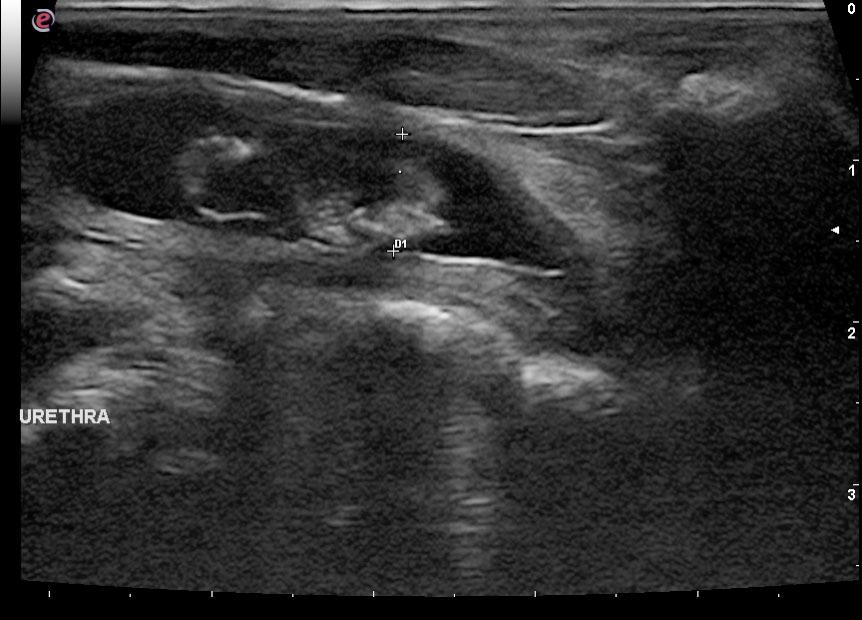
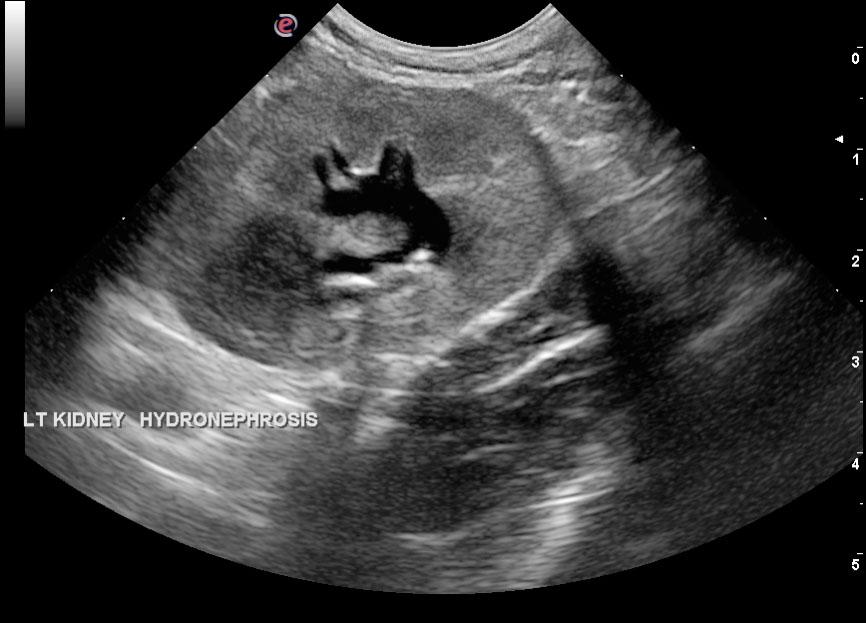
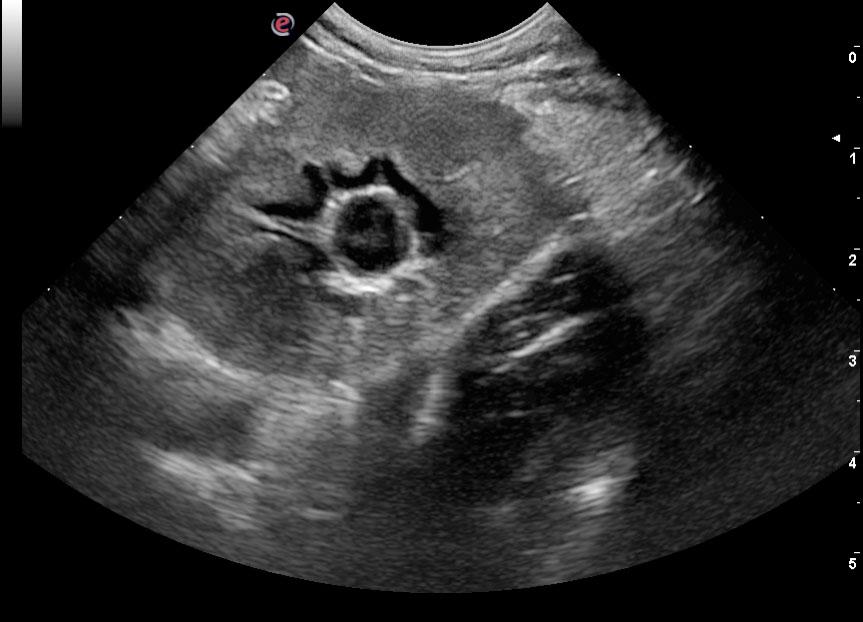
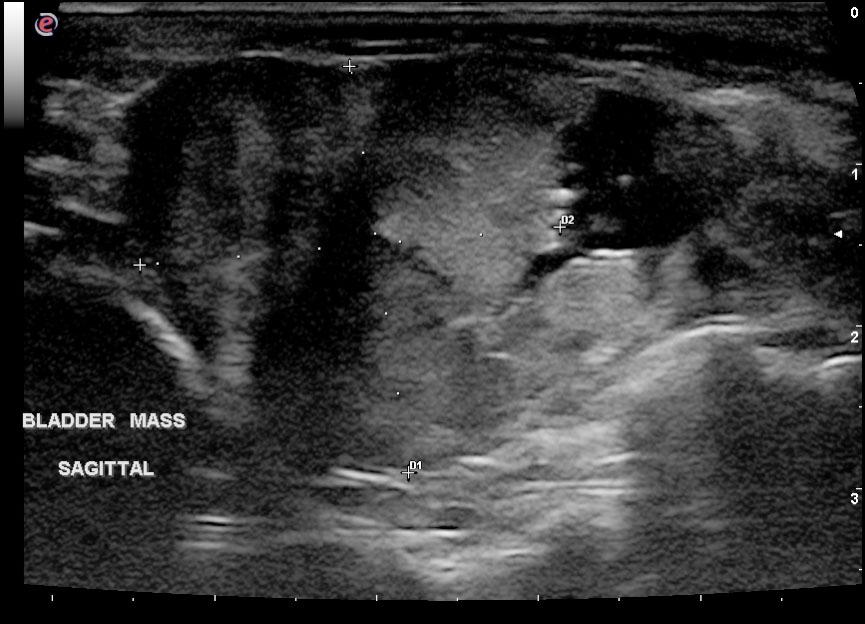
The left kidney revealed mild hydronephrosis and mild hydroureter. The bladder revealed a large mass within the lumen of the bladder taking up almost all of the luminal space and arising from the apex. The mass measures ~26mm x 26mm, is circular, having heterogeneous hypoechoic echogenicity. The mass appears to extend into the urethra where tissue density is seen. The mass has mineral density within it in areas creating partial acoustic shadowing. The mass appears to be obstructive.

DX

Bladder mass

Outcome

None

Comments

Case courtesy of Marty Henderson, DVM. SonoVet Inc. 

Clinical Differential Diagnosis

Bladder – neoplasia, polyploid cystitis, granulomatous cystitis, chronic bacterial cystitis

Sampling

None

Patient Information

Gender : Female, Spayed
Species : Feline
Type of Imaging : Ultrasound
Status : Complete

Clinical Signs

  • Hematuria
  • Signs of UTI
  • Stranguria
  • Weight loss

Images

lklkshtbladurethra

CBC

  • Neutrophils, High

Clinical Signs

  • Hematuria
  • Signs of UTI
  • Stranguria
  • Weight loss

Urinalysi

  • Blood Present
  • WBCs Present