MRI – Left cerebral neoplasia with increased intracranial pressure (ICP) and cerebellar herniation in a 10 ear old MN Boston Terrier dog

Case Study

MRI – Left cerebral neoplasia with increased intracranial pressure (ICP) and cerebellar herniation in a 10 ear old MN Boston Terrier dog

This 10 year old MN Boston Terrier dog has been ADR for the past few months, withdrawn, sedate, with developing hypermetric movements and loss of balance

Physical Exam: Obtunded; episodes of unawareness, ataxia and collapse. Murmur 1/6. Previous MRI found foramen magnum herniation of the cerebellum
This 10 year old MN Boston Terrier dog has been ADR for the past few months, withdrawn, sedate, with developing hypermetric movements and loss of balance

Physical Exam: Obtunded; episodes of unawareness, ataxia and collapse. Murmur 1/6. Previous MRI found foramen magnum herniation of the cerebellum
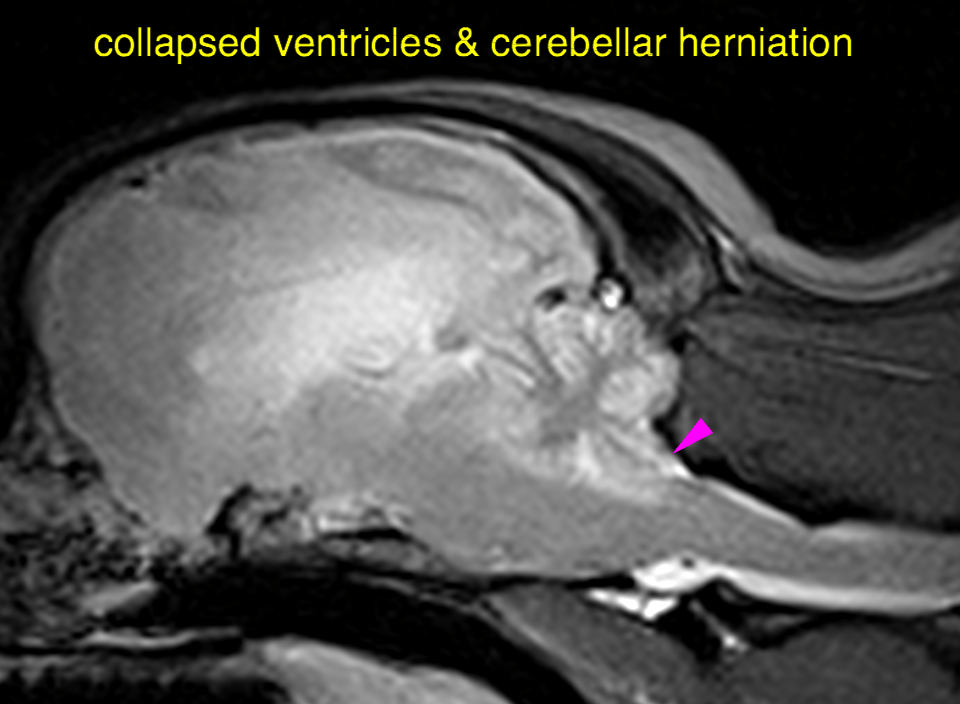
Image Interpretation

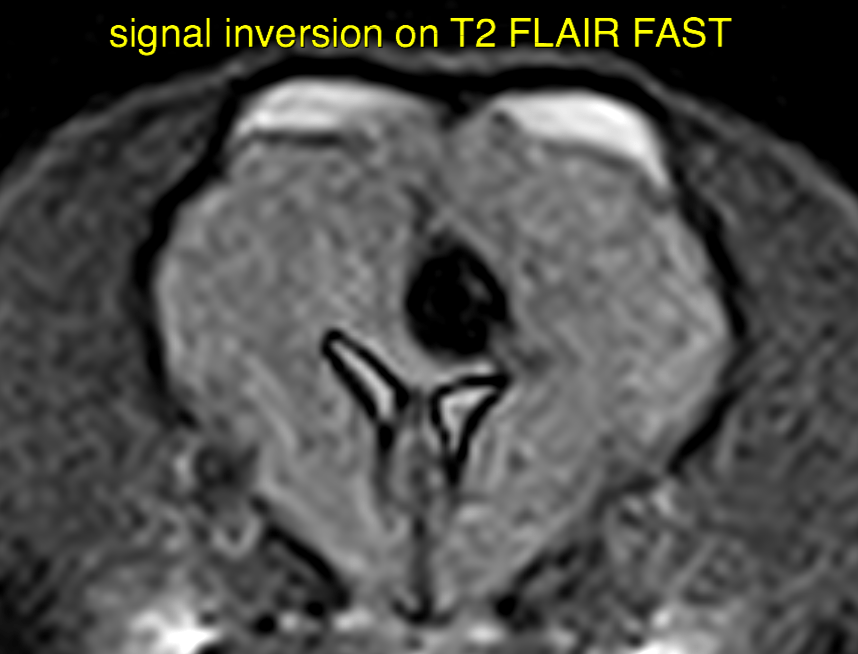
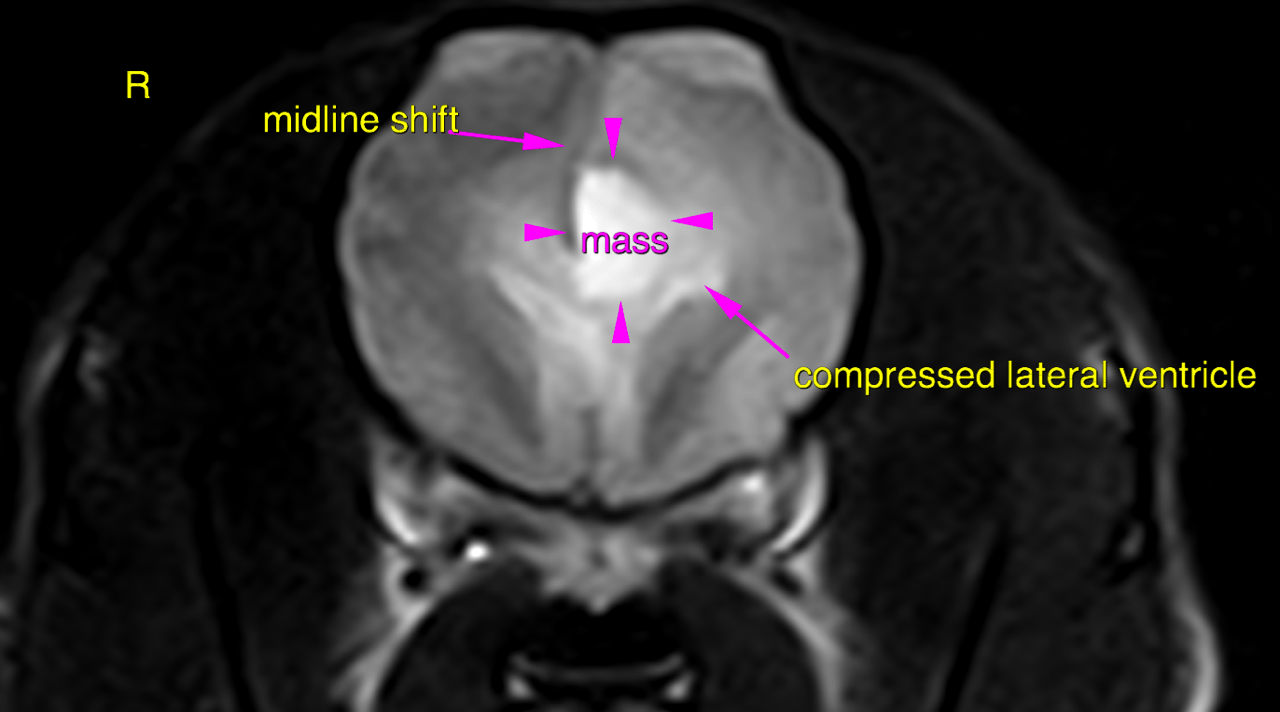
MRI – An ovoid T2-hyperintense and T1-hypointense space occupying lesion of 1 cm diameter is seen within the left frontal lobe between the cerebral falx and lateral ventricle. There is a significant mass effect on the lateral ventricle and cerebral hemisphere with a rightsided midline shift.
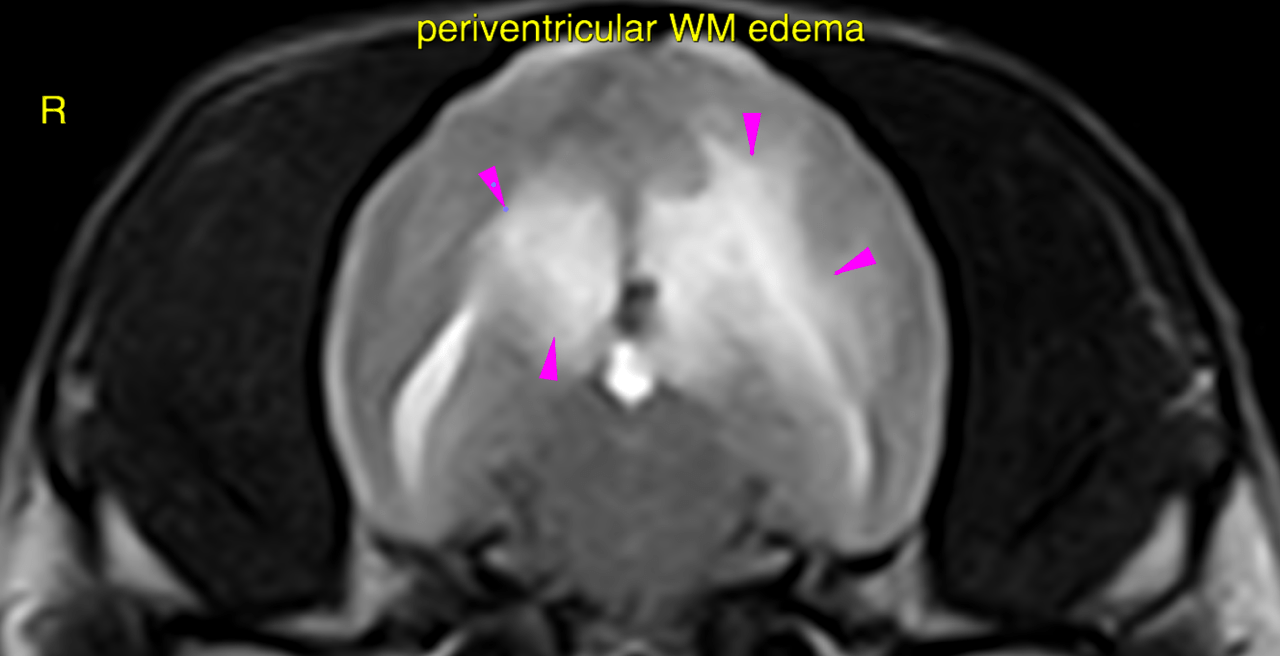
Extensive periventricular ill-defined white matter T2-hyperintensity is seen with an asymmetric distribution throughout the left and to a lesser degree also the right cerebral hemisphere. The pertinent signal is hypointense on T1-weighted images.
There is generalized swelling of the brain parenchyma with partial collapse of the CSF spaces and sulci as well as a mass effect on the brain stem and cerebellar herniation through the foramen magnum.

DX

intraaxial neoplasia within the left cerebral hemisphere as well as significantly increased intracranial pressure with difuse brain edema (mainly WM) and cerebellar herniation

Outcome

A glial cell tumor, specifically oligodendroglioma, is considered most likely as to the contact with the ventricular system. Astrocytoma round cell neoplasia and metastatic spread of another primary tumor are possible, but less likely differential diagnoses. The increased intracranial pressure (ICP) is likely paraneoplastic. Oligodendrogliomas for instance are known to be capable of dripping metastases which may take occlude the CSF spaces

Patient Information

Patient Name : Bacchus Barba
Gender : Male, Neutered
Species : Canine
Type of Imaging : Ultrasound
Status : Complete
Liz Wuz Here : Yes
Code : 16_00009

Clinical Signs

  • "Not Doing Right"
  • Ataxia

Exam Finding

  • Heart Murmur
  • Mentally dull

Images

bildschirmfoto_2016-05-12_um_16bildschirmfoto_2016-05-12_um_16bildschirmfoto_2016-05-12_um_16bildschirmfoto_2016-05-12_um_16

Clinical Signs

  • "Not Doing Right"
  • Ataxia
Skip to content