The patient is a 13 year old MN DSH cat with pleural effusion. The patient was started on Lasix.
The patient is a 13 year old MN DSH cat with pleural effusion. The patient was started on Lasix.
The patient is a 13 year old MN DSH cat with pleural effusion. The patient was started on Lasix.
The patient is a 13 year old MN DSH cat with pleural effusion. The patient was started on Lasix.
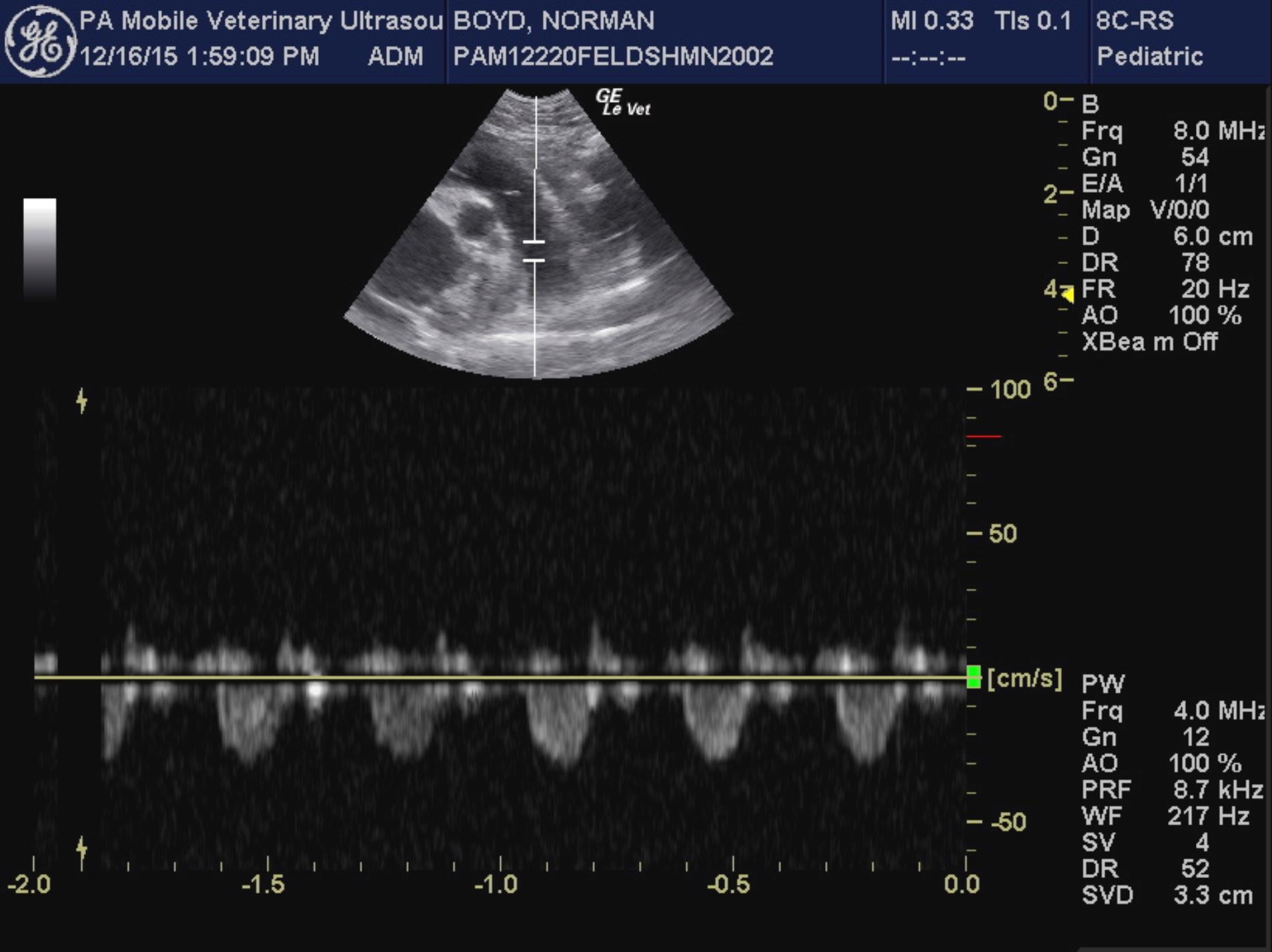
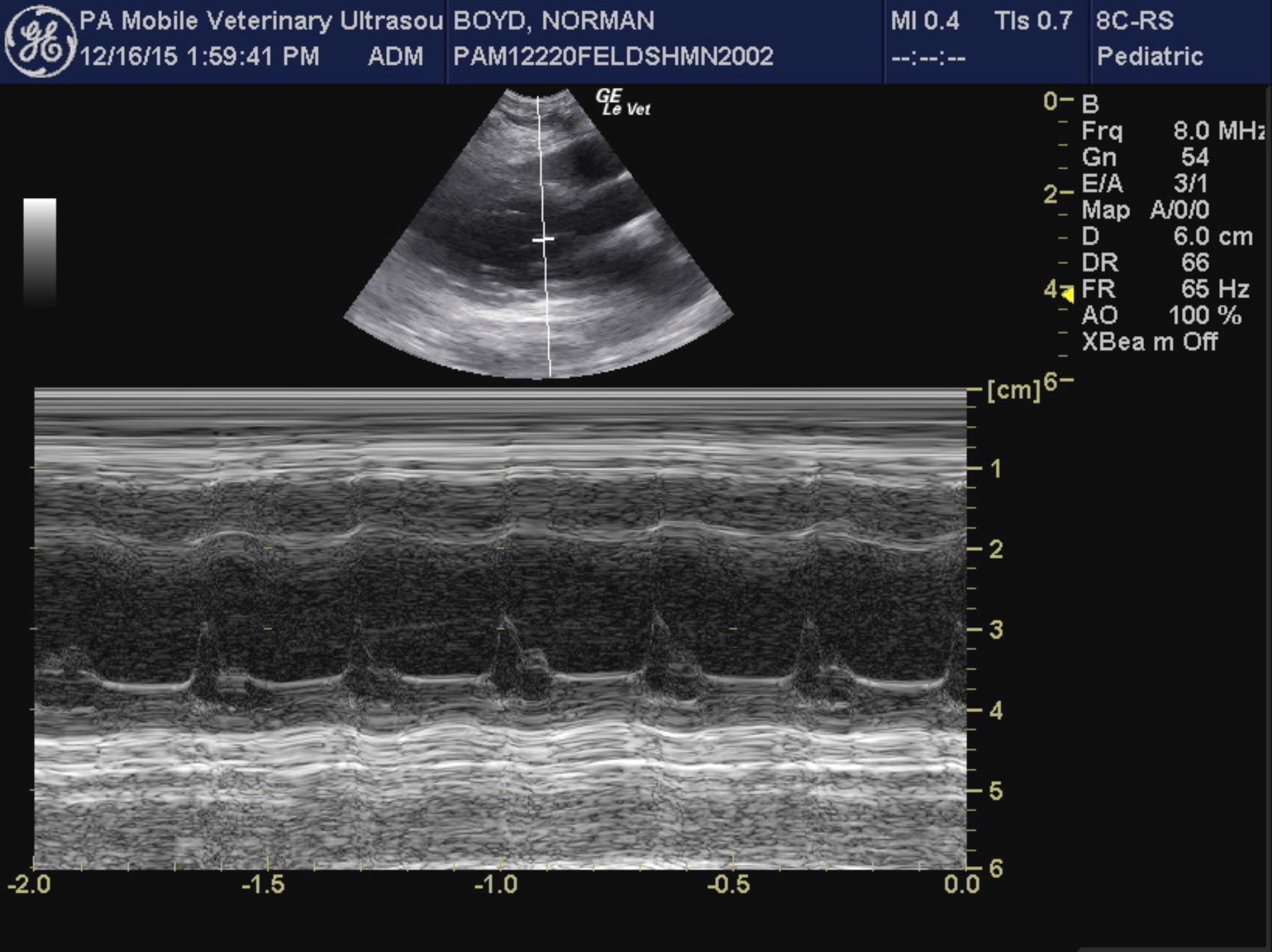
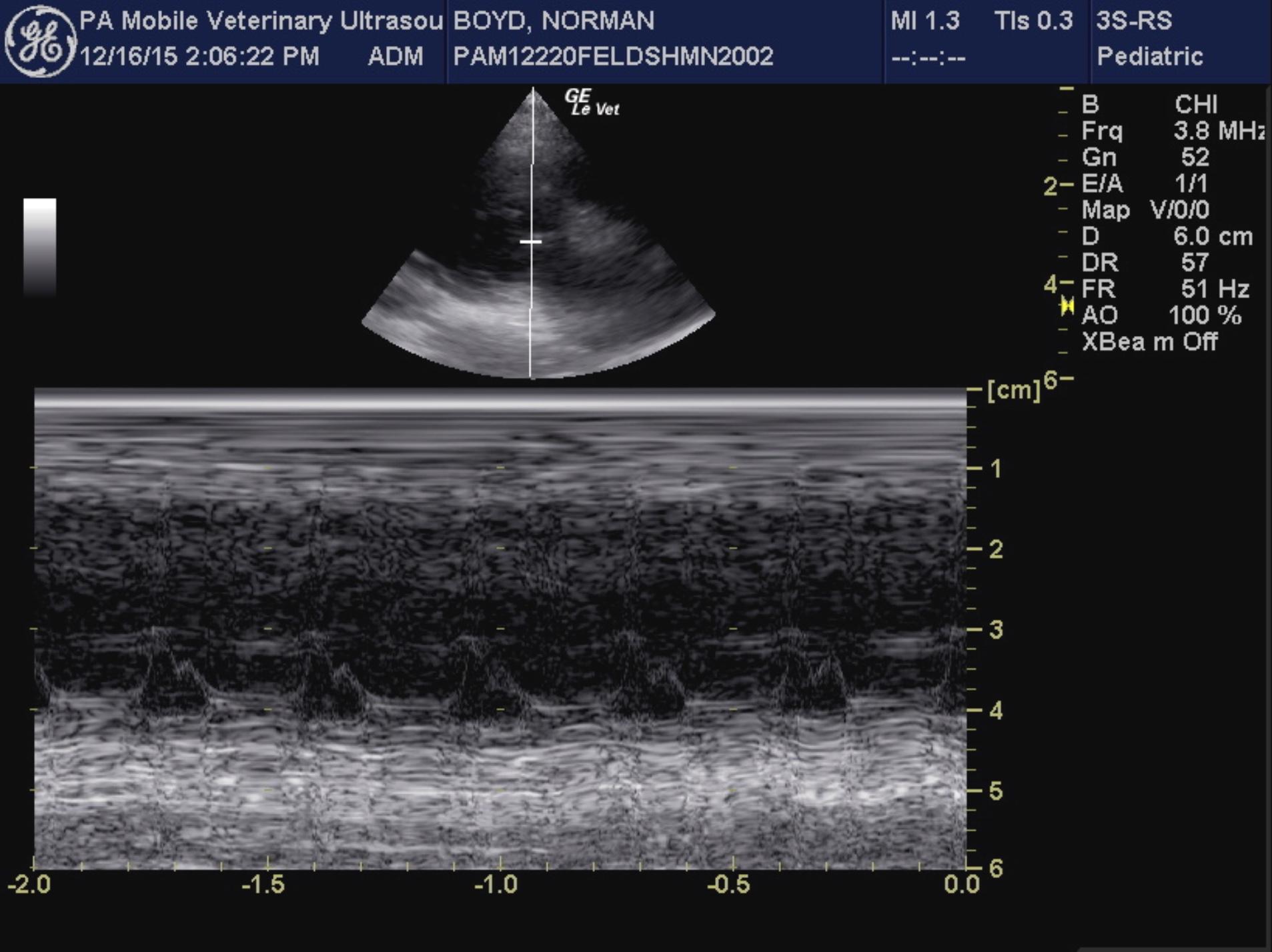
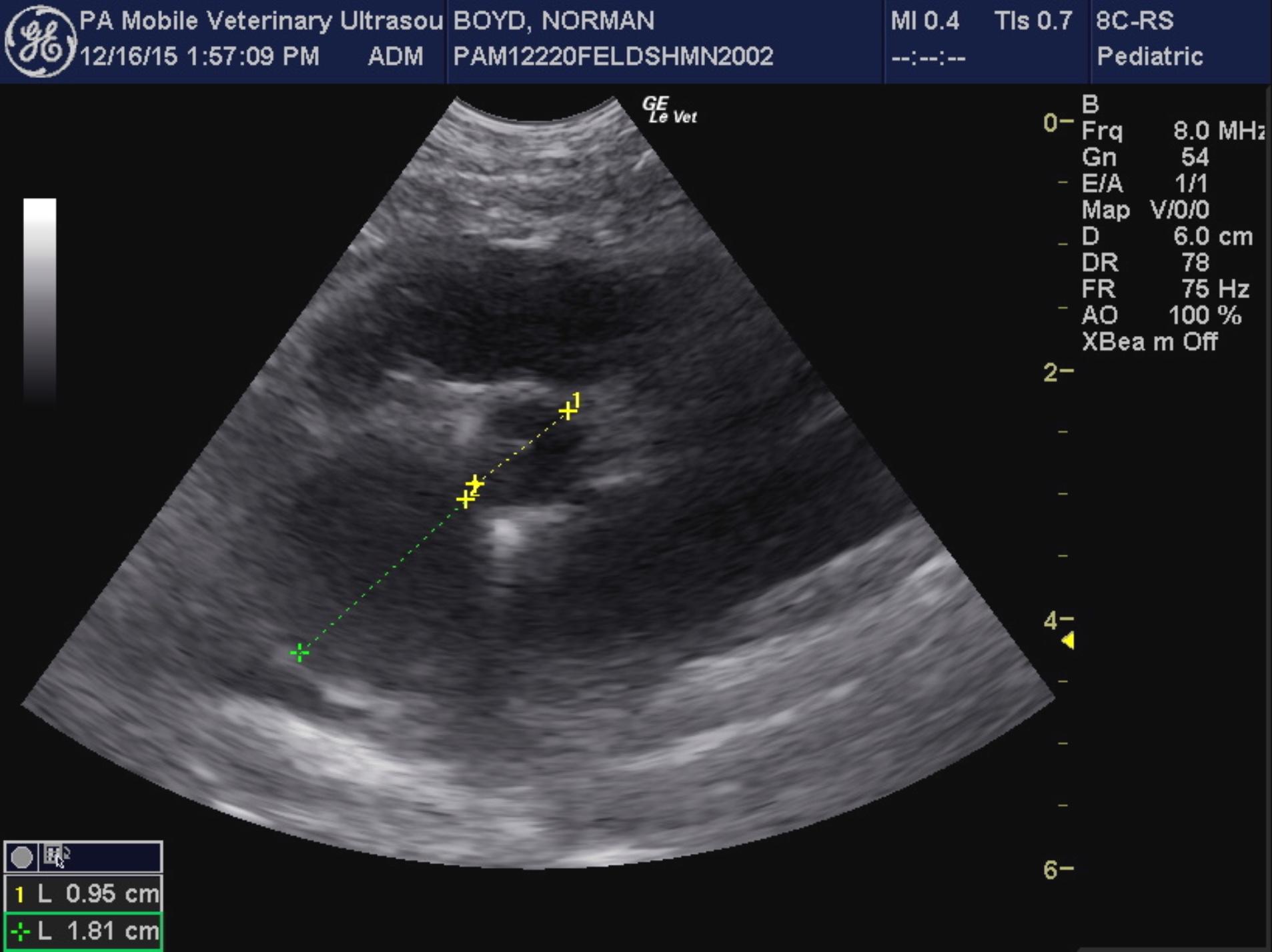
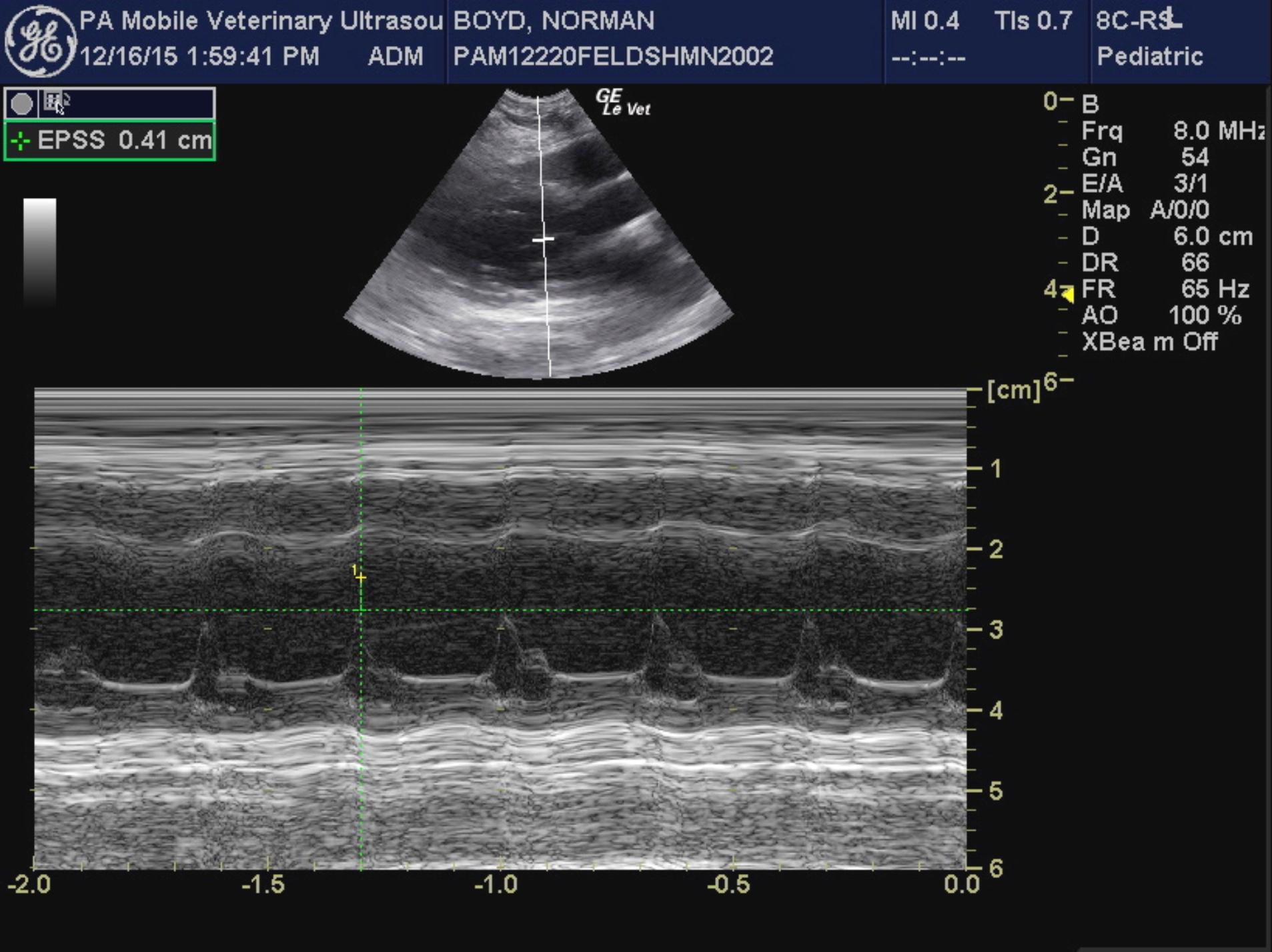
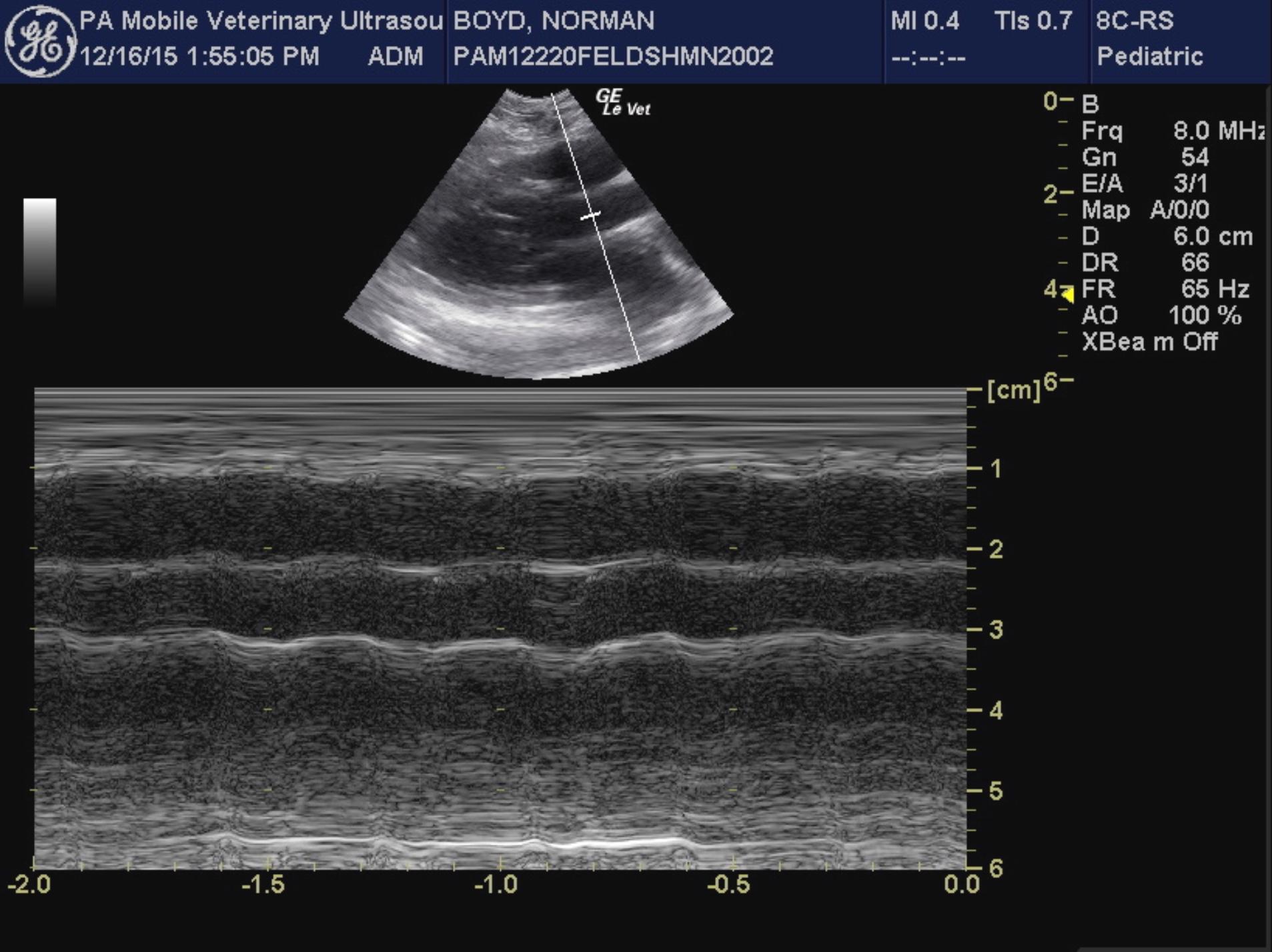
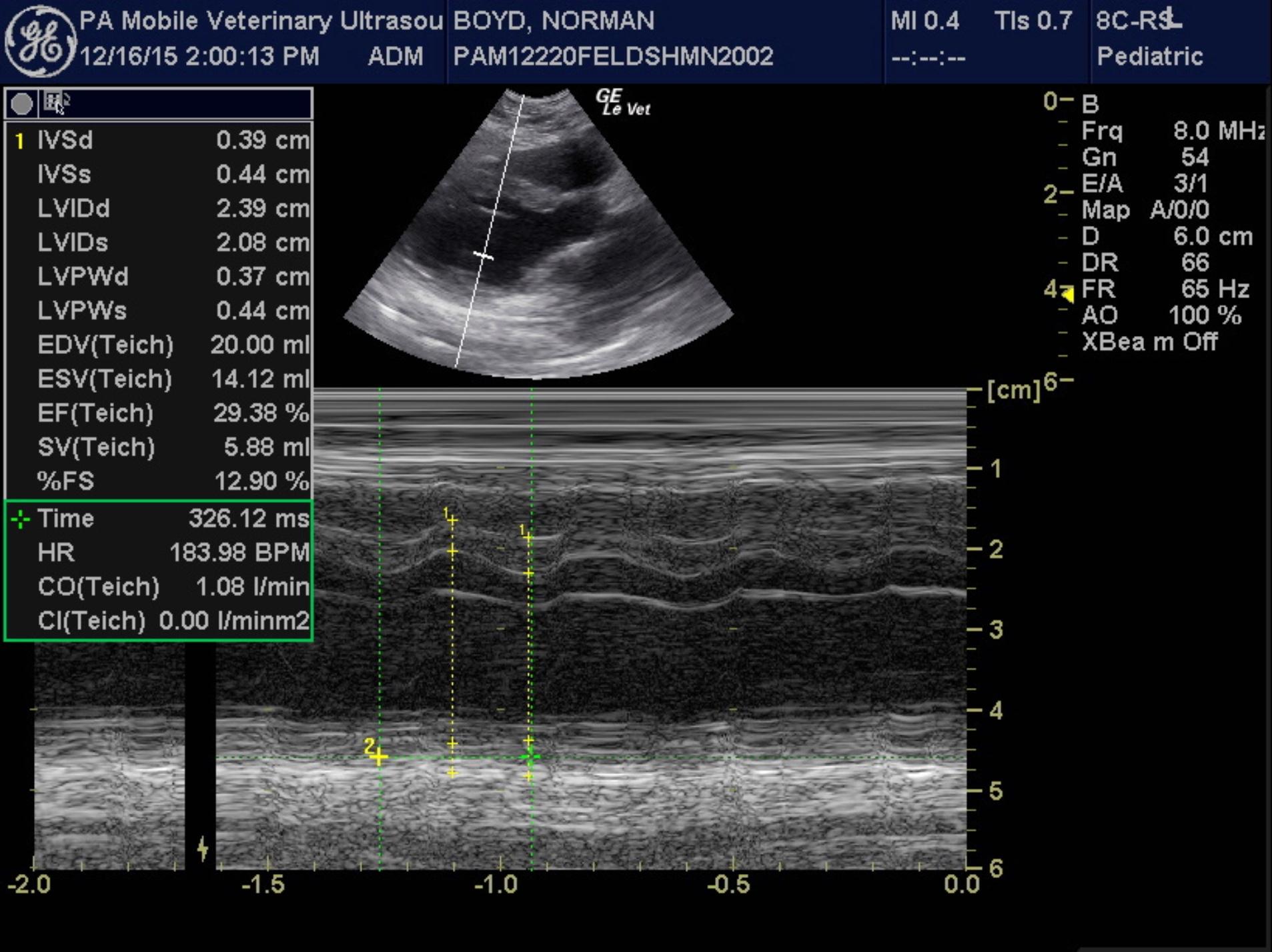
The left ventricle appears with severe dilation and substantially impaired systolic function, as assessed by measuring FS (12.9%) and EPSS (0.41 cm). Dimensions of the interventricular septum and the free wall is within normal ranges. The left atrium is markedly dilated, given the fact that the patient is already on furosemide. No significant mitral regurgitation is detected. Blood flow across the LVOT is laminar at reduced maximum velocities, supporting the finding of severely reduced stroke volume. The right ventricle is dilated, as is the right atrium. Mild tricuspid regurgitation at normal systolic gradients is observed. Flow across the RVOT, pulmonic valve and main pulmonary artery is laminar. Minimal pulmonic regurgitation is seen. VTIs within the pulmonary artery are small, which is certainly related to low stroke volume. Pleural effusion is noted. The heart action is arrhythmic with HRs between about 140 and 185.
M-Mode
IVSd 0.39 cm
LVd 2.39 cm
LVWd 0.37 cm
IVSs 0.44 cm
LVs 2.08 cm
LVWs 0.44 cm
LA/AO 1.8
Therapy:
If the patient is in an acceptable clinical condition:
Triple Therapy (Furosemide – 2-3 mg/kg bid-tid, ACEI, off label Pimobendan – 0,25
mg/kg bid) is recommended. Additionally, anticoagulants (Plavix at 18.75 mg/cat sid)
should be given. It is also recommended to record an ECG in order to diagnose the
present arrhythmia and to assess the need for further anti-arrhythmic treatment.
The plasma Taurine level should be checked and Taurine should be supplemented
while the result is pending or – if a low Taurine level is detected – lifelong (250 mg/cat
sid). If the disease responds to Taurine, an effect is usually seen within 8-10 weeks
(according to personal experience). Some do not respond even if the plasma level
is low.
Kidney function and electrolytes should be closely monitored until the patient is in an
acceptable clinical condition.
If the patient is in a poor clinical condition:
If the patient is very weak or at the edge of shock (which is sometimes seen in
cardiomyopathic cats), I would give Dobutamine at 1-2 (-5) microgr/kg/hr, starting at 1
and increasing the dosage as needed. These patients usually have a very low blood
pressure and become bradycardic. The ideal Dobutamine dosage is achieved if the
systolic blood pressure is >120 mm Hg. In this specific case I would not give an ACEI
and I would start with s.c. Heparin (250 IE/kg tid) instead of Plavix because oral
medication will not be resorbed well enough until the circulation and clinical condition
has improved. If the patient has significantly improved, oral medication as mentioned
above (acceptable clinical condition) can be started.
Prognosis:
Mid-Term prognosis is bad (if not responding to Taurine). Patients like this one can die
suddenly, some do not start eating again and have to be euthanized because of the
lack of clinical improvement, some die from CHF or forward failure.
A re-check echocardiogram is recommended in 1-2 weeks and repeated radiographs
are recommended depending on the clinical improvement. Kidney function and
electrolytes should be evaluated together with every cardio re-check.