05_00150 Shirley M Pancreatic mass; poorly differentiated carcinoma

Case Study

05_00150 Shirley M Pancreatic mass; poorly differentiated carcinoma

A 16-year-old SF DSH with a history of diabetes and hyperthyroidism was presented for evaluation of vomiting, diarrhea, and anorexia. Urinalysis showed SG of 1.017, proteinuria, and hematuria with negative bacterial growth. Coagulation panel was mildly elevated.
A 16-year-old SF DSH with a history of diabetes and hyperthyroidism was presented for evaluation of vomiting, diarrhea, and anorexia. Urinalysis showed SG of 1.017, proteinuria, and hematuria with negative bacterial growth. Coagulation panel was mildly elevated.

Sonographic Differential Diagnosis

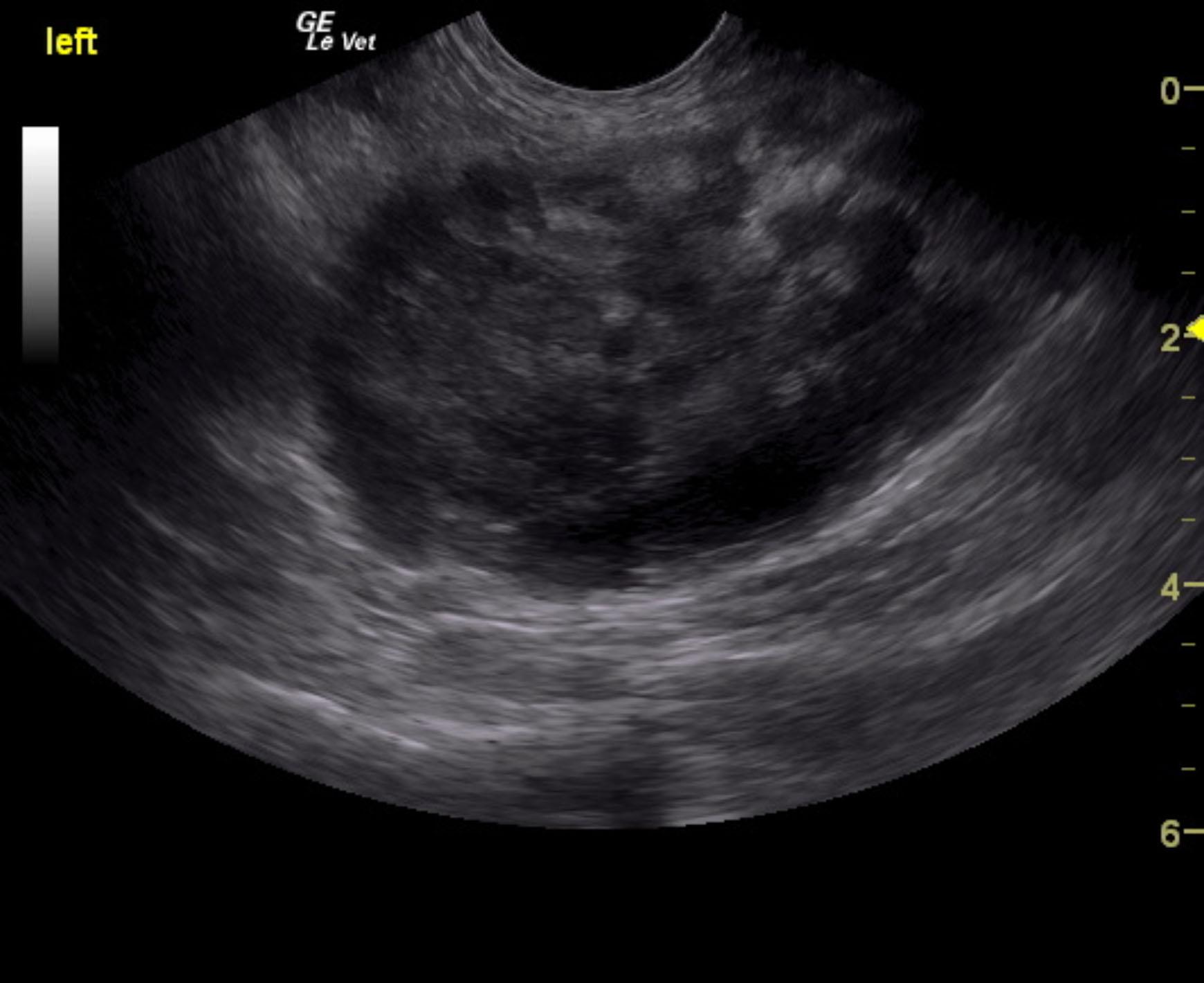
Pancreatic mass, left lobe. This appears resectable. Minor adjacent lymphadenopathy.
Recommend assessment of the cytology followed by exploratory surgery with aggressive left pancreatectomy and lymph node removal as well as exploration for any evidence of metastatic disease that was not noted on ultrasound. However, none was suspected. Chest radiographs are also warranted. Pancreatic carcinoma is the primary differential, granulomatous lesion is also possible.

Image Interpretation

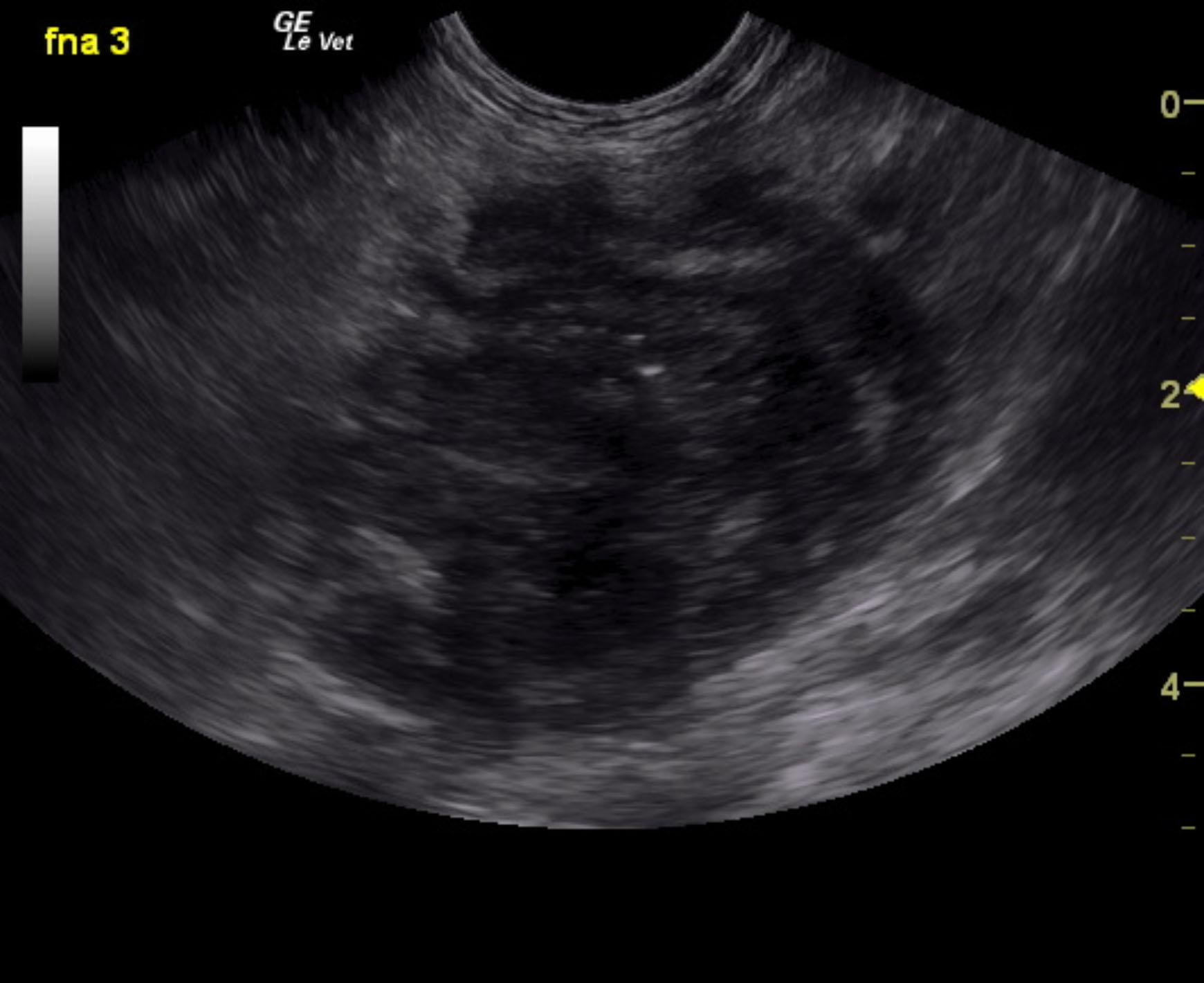
A left, caudal pancreatic mass was noted in this patient and measured 4.0 cm with moderate complexity attached to the left lobe of the pancreas. Hyperechoic surrounding fat was also noted. This is consistent with extension of the neoplastic process or associated inflammation. This appears potentially resectable. An exploratory surgery is recommended with removal of the adjacent lymph node measuring 1.5 cm. The right limb of the pancreas was mildly heterogenous, yet unremarkable. There was no overt evidence of metastatic disease noted. FNA were obtained of the pancreatic mass. The pancreas in this patient presented severely dilated duct at 0.49 cm with heterogenous, irregular parenchymal changes and tortuous pancreatic duct.
The caudal abdomen revealed a cystic or irregular lymph node that measured 1.48 x 1.15 cm. This is likely jejunal lymph node with distorted architecture. Granulomatous disease or possible neoplasia may be present. FNA are recommended.

DX

Histology of mass was a poorly differentiated carcinoma of unknown type or organ of origin

Outcome

The lesion was resected surgically even though wrapped around the splenic vessels, hence concurrent splenectomy performed, but the patient died in the postoperative period likely owing to a thromboembolic episode.

Clinical Differential Diagnosis

Pancreas – pancreatitis, neoplasia, abscessation
Uncontrolled hyperthyroidism
GIT – IBD, neoplasia, intussusception, foreign body, ulceration, infectious (viral/bacterial/parasites)
Renal – renoliths, neoplasia
Interstitial cystitis

Sampling

FNA results are not available. Histology of mass removed was a poorly differentiated carcinoma of unknown type or organ of origin.

UA Specific Gravity Range

1.017

Patient Information

Gender : Female, Spayed
Species : Feline
Type of Imaging : Ultrasound
Status : Complete

Clinical Signs

  • Anorexia
  • Diarrhea
  • Vomiting

Images

murray_feline_pancreatic_massmurray_feline_pancreatic_mass_fna

Clinical Signs

  • Anorexia
  • Diarrhea
  • Vomiting

Urinalysi

  • Blood Present
  • Culture negative
  • Protein Present
Skip to content