Portosystemic Shunt (PSS), Cystic Calculus in a 10 year old MN Shih Tzu dog

Case Study

Portosystemic Shunt (PSS), Cystic Calculus in a 10 year old MN Shih Tzu dog

A 10-year-old MN Shih Tzu was presented for evaluation of intermittent stranguria and weight loss. On rectal palpation, there was some thickening of the prostate. Urinalysis and radiographs were both within normal limits and blood work showed elevated ALP activity.  
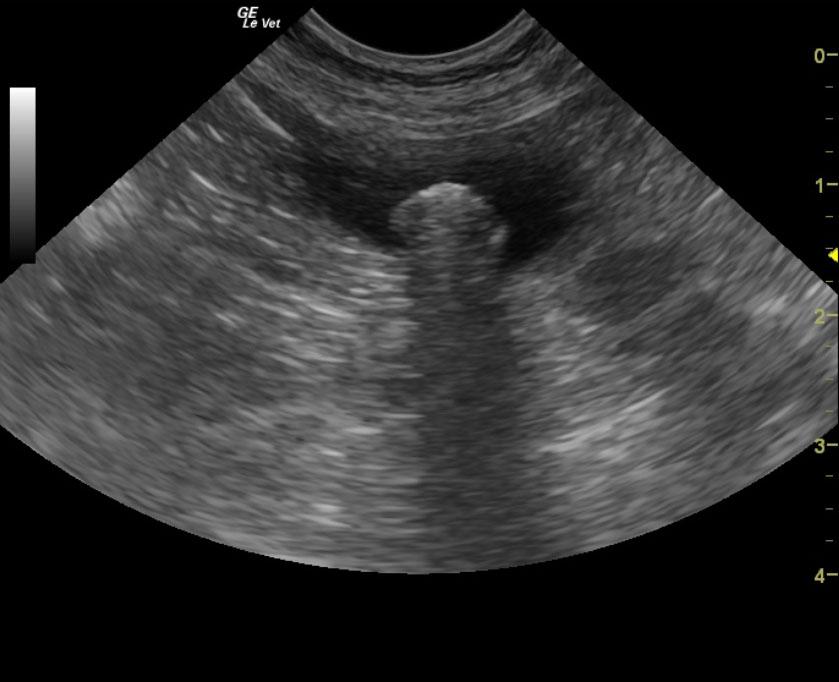


A 10-year-old MN Shih Tzu was presented for evaluation of intermittent stranguria and weight loss. On rectal palpation, there was some thickening of the prostate. Urinalysis and radiographs were both within normal limits and blood work showed elevated ALP activity.  
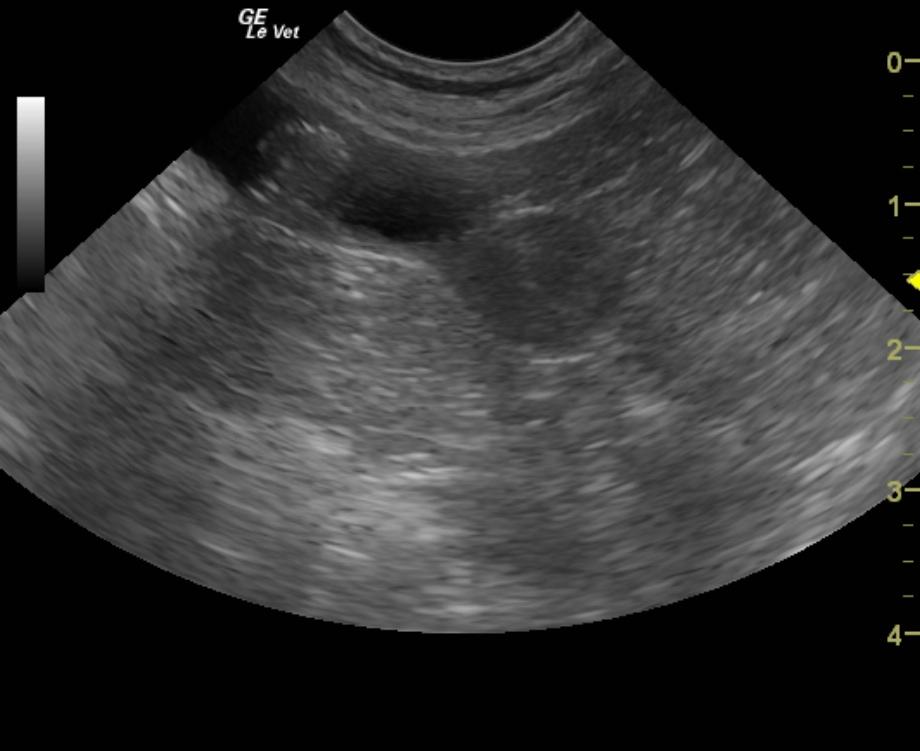


Sonographic Differential Diagnosis

Bladder calculus, prominent prostate. Recommend cystotomy, stone analysis and culture.

Image Interpretation

The urinary bladder was structurally unremarkable with anechoic urine and normal bladder wall. However, 1.0 cm shadowing calculus was noted.

DX

Cystic calculus, PSS

Outcome

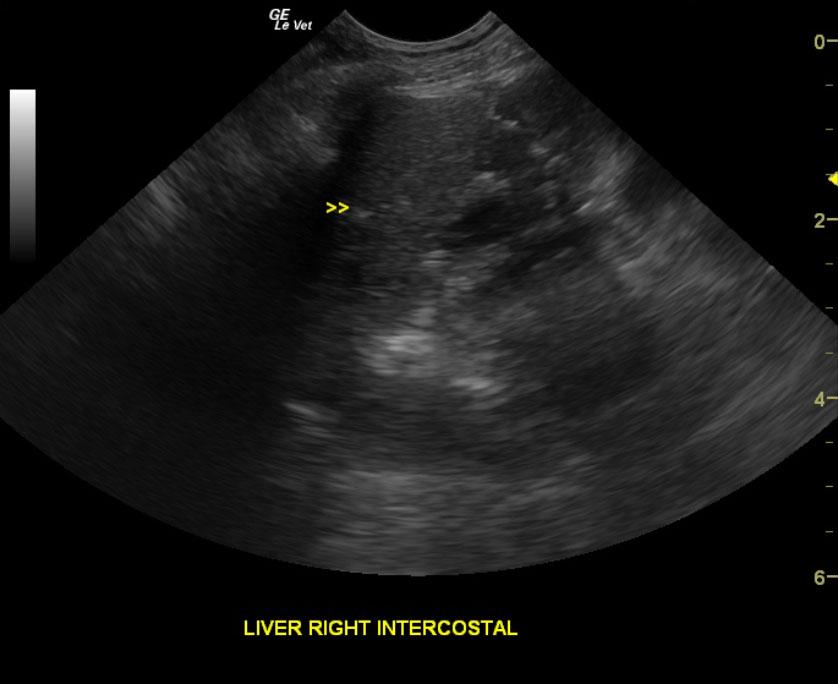
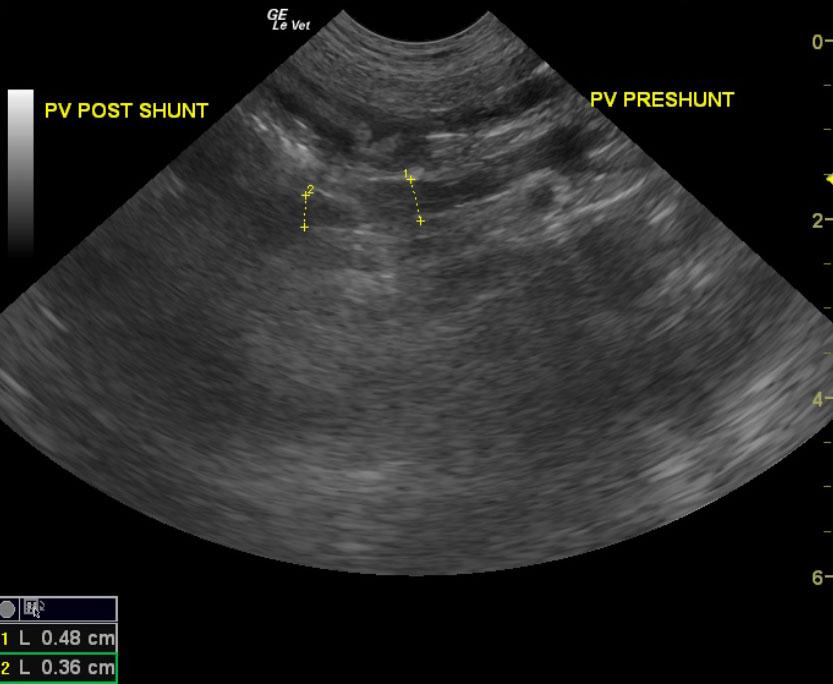
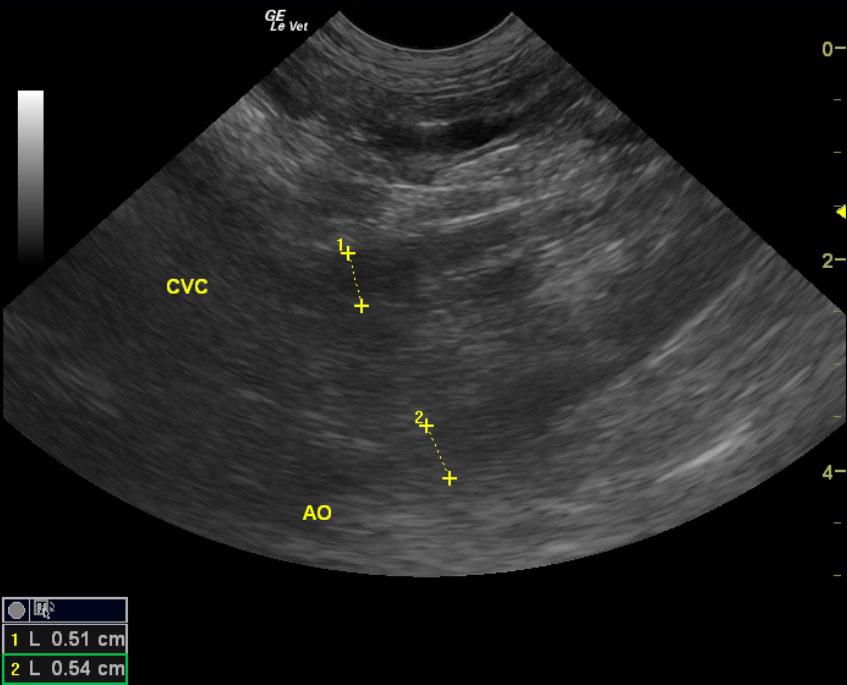
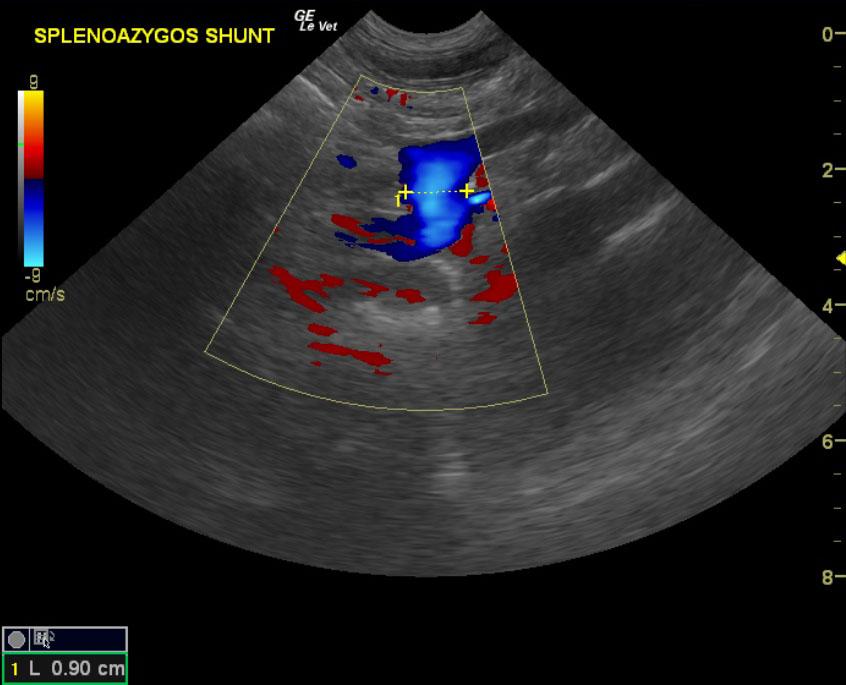
A repeat ultrasound was done a few days later. Further review of the liver on an empty stomach with less artifact in the region of the portal hilus revealed a 0.9 cm splenoazygos shunt and microhepatica with some remodeling of the liver. Pre shunt the portal vein measured 0.48 cm, post shunt 0.31 cm. The vena cava measured 0.51 cm, aorta 0.54 cm. The shunt was investigated again after finding that the cystotomy revealed an ammonium biurate calculus. The region was not overtly visible during the prior sonogram owing to artifact provided by the transverse and ascending colon and stomach.

Comments

It is debatable whether the liver would be capable of taking on new portal volume with ameroid constrictor treatment. Therefore, I recommend medical treatment with L/D, Lactulose, and Metronidazole with reassessment of the bile acids after the initial bile acids are taken today. The prognosis long term is guarded. Surgical consultation can be considered with ligation of the shunt and intraoperative portal vein velocities can be taken in order to assess for the possibility of portal hypertension development.  
 

Clinical Differential Diagnosis

Bladder pathology– urolith, neoplasia, granulomatous cystitis; Prostatic pathology – neoplasia, abscessation; Urethra pathology – neoplasia, lith; Liver pathology – vacuolar hepatopathy, nodular regeneration, neoplasia, granulomatous disease

Sampling

None

Patient Information

Patient Name : Junior M
Gender : Male, Neutered
Species : Canine
Type of Imaging : Ultrasound
Status : Complete
Liz Wuz Here : Yes
Code : 03_00315

Clinical Signs

  • Stranguria
  • Weight loss

Exam Finding

  • Prostatic enlargement

Images

lithprostliverpv_prepostcvcaoshunt

Blood Chemistry

  • Alkaline Phosphatase (SAP), High

Clinical Signs

  • Stranguria
  • Weight loss