Spindle cell sarcoma and abscessation in a leg mass in a 7 year old MN Labrador Retriever

Case Study

Spindle cell sarcoma and abscessation in a leg mass in a 7 year old MN Labrador Retriever

A 7-year-old MN Labrador Retriever was presented for severe hind limb swelling, bruising in the inguinal region (Image 1) and grade 3 limp. Mild fever was present. Radiographs revealed severe soft tissue swelling of around the femur without bone involvement. Thoracic and abdominal radiographs were unremarkable.
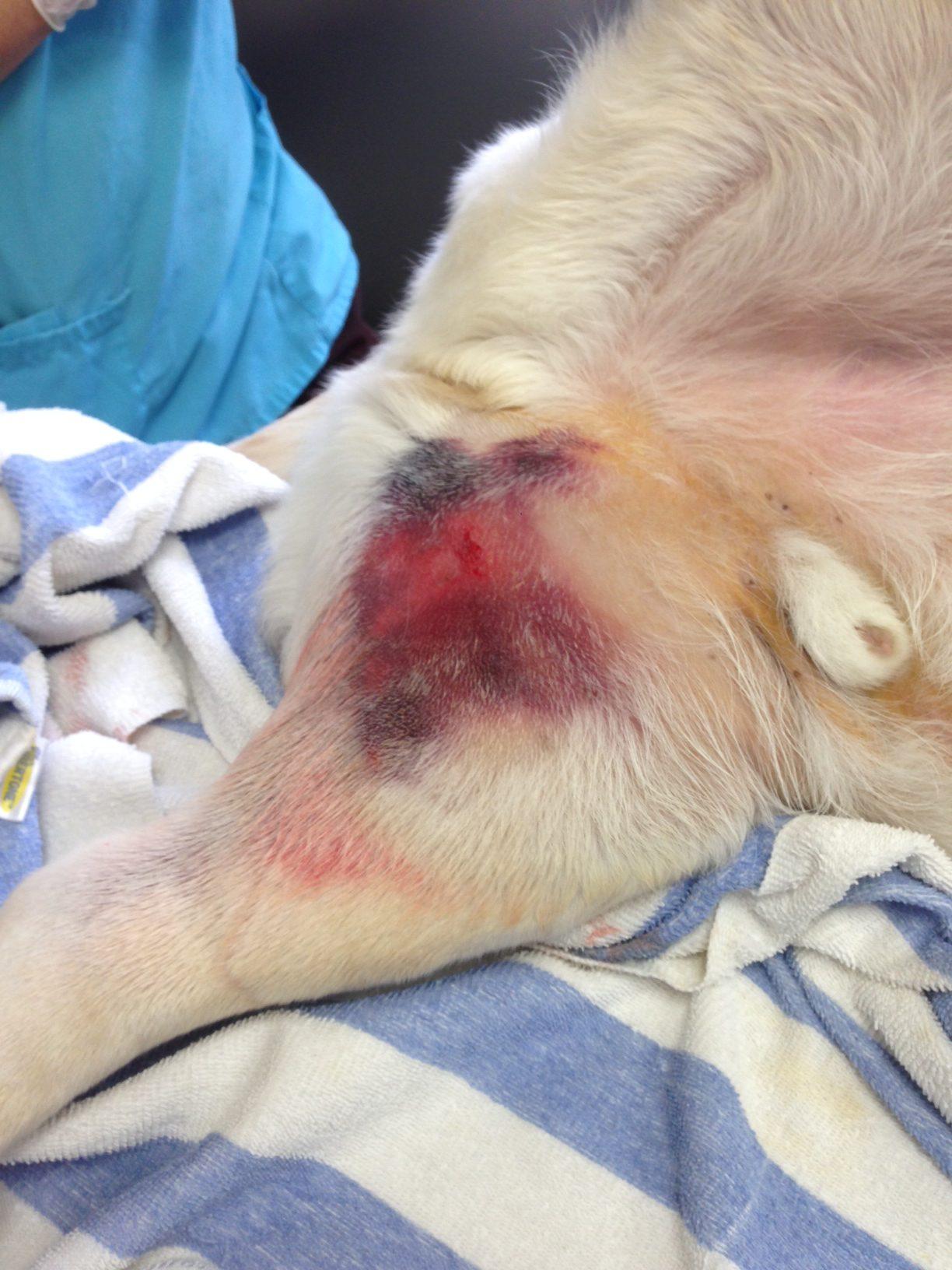
A 7-year-old MN Labrador Retriever was presented for severe hind limb swelling, bruising in the inguinal region (Image 1) and grade 3 limp. Mild fever was present. Radiographs revealed severe soft tissue swelling of around the femur without bone involvement. Thoracic and abdominal radiographs were unremarkable.
Sonographic Differential Diagnosis

Abnormal proliferative tissue in the left hind limb with abscessation. Suspect mast cell disease, sarcoma, other neoplasia, or a non-visible foreign body and subsequent abscess.

Image Interpretation

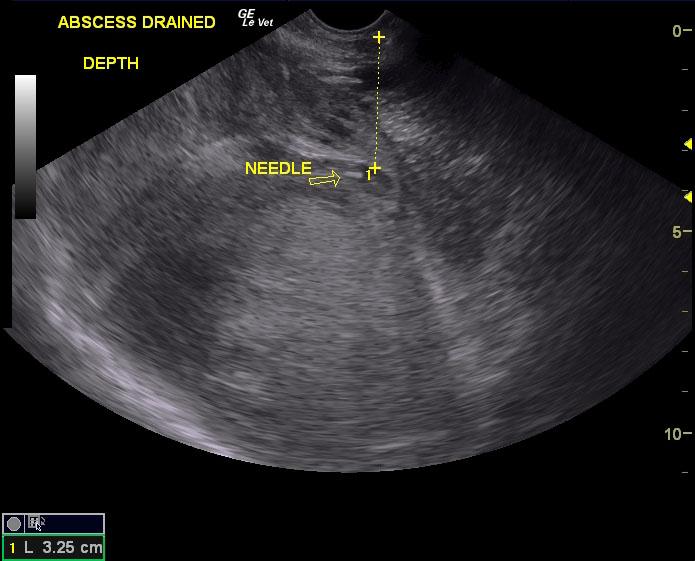
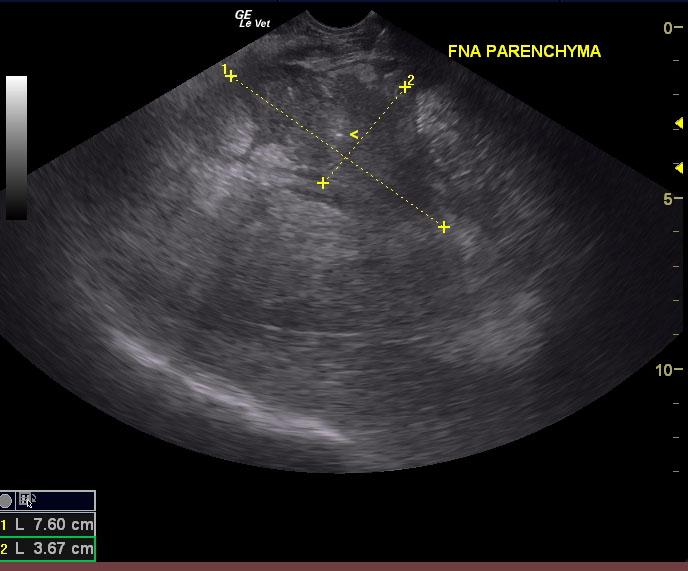
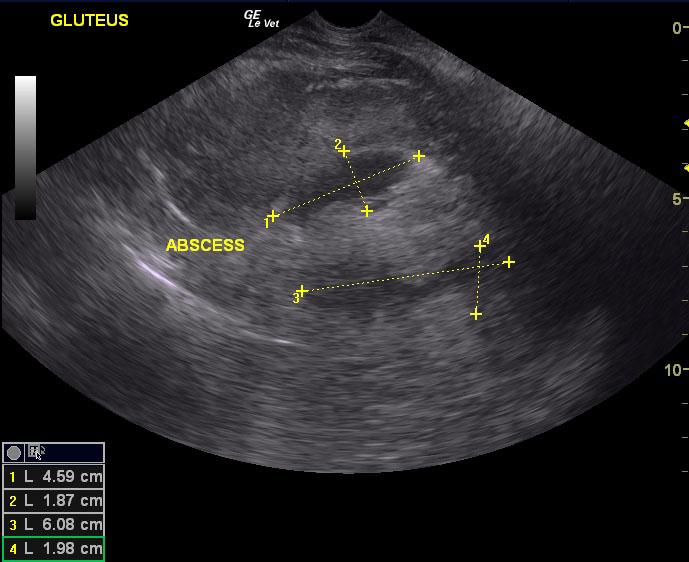
The hind leg was imaged and found to have mixed hypoechoic and complex proliferative tissue throughout the musculature adjacent to the right femur (Image 2). The bone appeared normal without lytic lesions. An 8.5 x 5.5 cm, mixed echogenic abscess was present (Image 3), which was drained by ultrasound-guided procedure and the distance from the skin to the abscess was measure for eventual surgical planning should a drain placement be necessary (Images 4 & 5). US-guided 22-gauge FNA of the parenchymal portion of the mass was performed (Image 6). The drained abscess cavity was then infiltrated with Enrofloxacin in case of sepsis (Image 7). Regional iliac lymphadenopathy was present, yet uniform. The remainder of the abdomen was unremarkable. There was no evidence of pathology or metastatic lesions.

DX

Spindle cell neoplasm and sterile suppurative inflammation

Outcome

The patient demonstrated less pain after drainage of the abscess. Antibiotics and pain management were initiated. Immediate amputation of the left hind limb is recommended with oncologist consultation. Guarded prognosis.

Comments

The owners are evaluating their options with an oncologist. 

Clinical Differential Diagnosis

Lymphatic obstruction (lymph node/lymph vessel) – neoplasia (lymphoma, mast cell), trauma, cellulitis, granulomas, abscessation. Vasculitis. Caudal vena cava obstruction – thrombosis, neoplasia, granuloma.

Sampling

US-guided FNA and abscess drainage under sedation. Cytology revealed spindle cell neoplasia and sterile suppurative inflammation.

Patient Information

Patient Name : Brady M
Gender : Male, Neutered
Species : Canine
Type of Imaging : Ultrasound
Status : Complete
Liz Wuz Here : Yes
Code : 13-00021

Clinical Signs

  • Lameness
  • Swollen limb

Exam Finding

  • Erythema
  • Swollen limb

Images

image_1_brady_mcneil_mctimage_2image_3image_4

Clinical Signs

  • Lameness
  • Swollen limb
Skip to content