Splenoazygous shunt in an 8 year old FS Maltese

Case Study

Splenoazygous shunt in an 8 year old FS Maltese

An 8-year-old spayed female Maltese dog was presented for evaluation of severely elevated pre-and post-prandial bile acids. In addition, the patient was positive for Rocky Mountain spotted fever. Seizure activity was present in the history
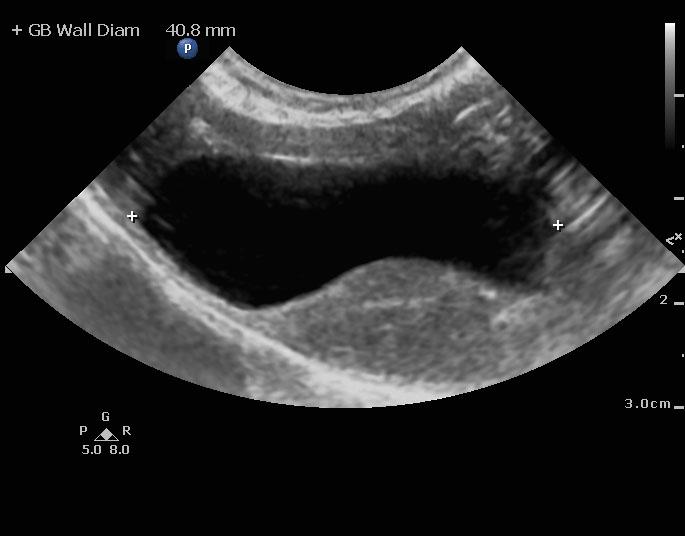
An 8-year-old spayed female Maltese dog was presented for evaluation of severely elevated pre-and post-prandial bile acids. In addition, the patient was positive for Rocky Mountain spotted fever. Seizure activity was present in the history
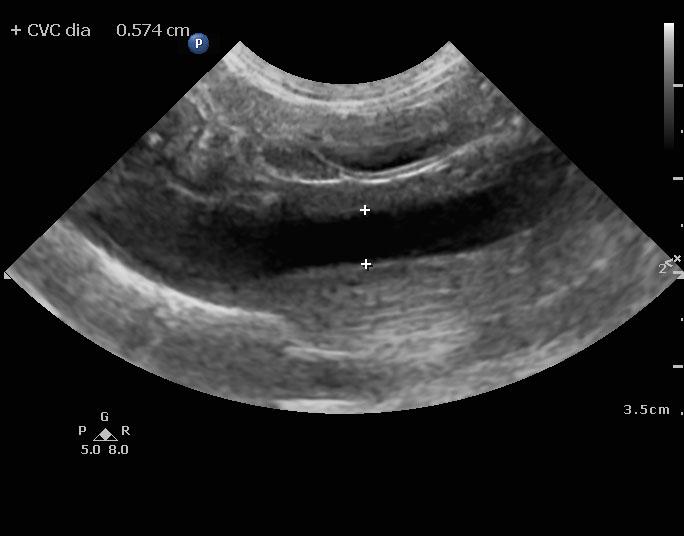
Sonographic Differential Diagnosis

Splenoazygos shunt with concurrent chronic inflammatory hepatopathy.
Small calculi were noted in the bladder measuring 0.1 and 0.2 cm each

Image Interpretation

The urinary bladder presented a small concretion that measured 0.5 cm and was non-shadowing.
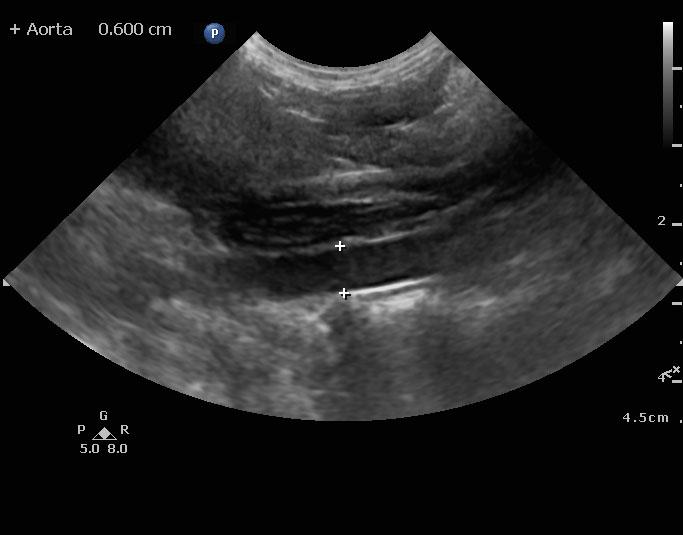
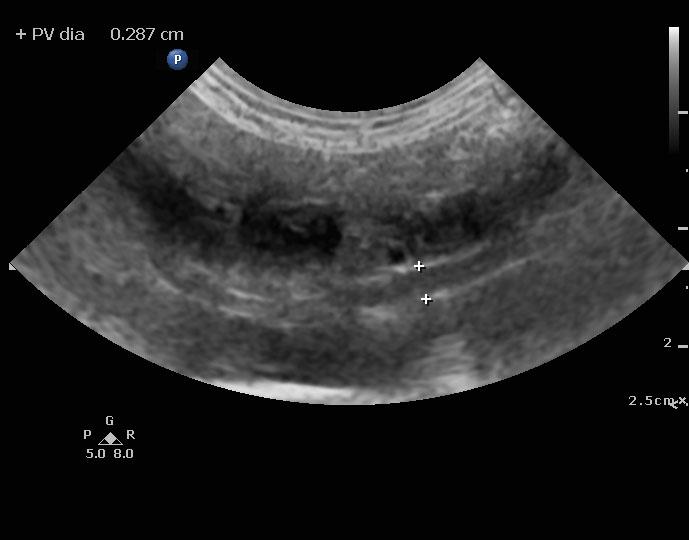
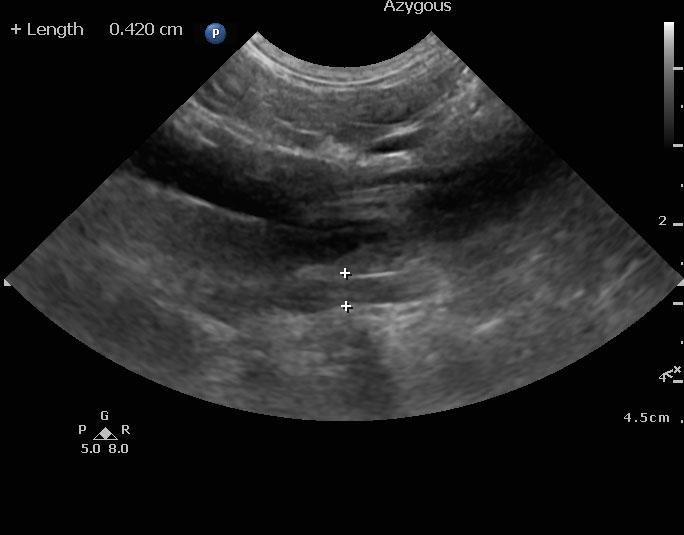
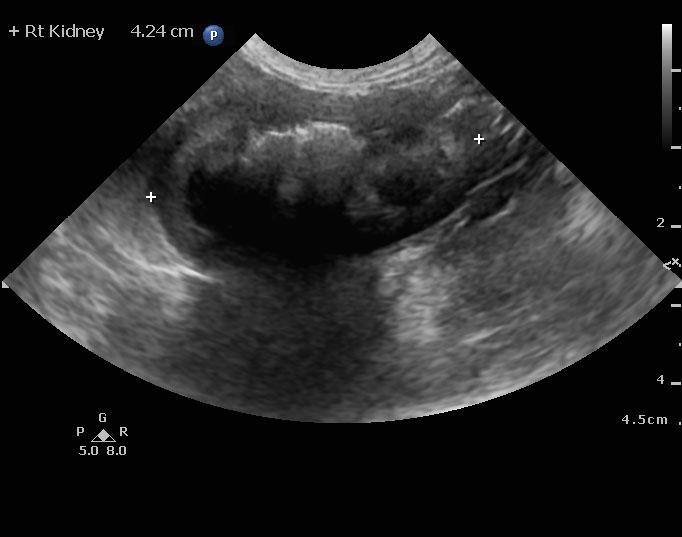
The kidneys presented a significant amount of pelvic mineralization that was non obstructive. The left kidney measured 3.6 cm. Calculus was noted in the left kidney pelvis and measured 1.16 cm. The right kidney measured 4.24 cm with pelvic calculus that measured 1.49 cm. The liver was subnormal in size with coarse architecture and increased portal markings. The vena cava measured 0.74 cm, and the aorta 0.62 cm. The portal vein was subnormal in size and measured 0.29 cm. An extrahepatic, portosystemic shunt was noted. This was deriving from the splenic vein entrance into the portal vein. The shunt was tortuous and measured approximately 0.5 cm in width and traveled dorsally and entered into the aortic hiatus. This created a splenoazygos shunt and a “double aorta” was formed. Concurrent hepatic disease is likely, given the increased portal markings and remodeling.

DX

Splenoazygous shunt

Outcome

The patient is stable on medical management only and no further seizure activity or other clinical signs have been noted.

Comments

Given the low BUN in this patient, emerging liver failure is possible, especially given the patient’s age. It is debatable whether surgical intervention with ameroid constrictor would be the optimal approach as the liver may not be able to handle the new volume due to chronic disease and potential for concurrent portal vein hypoplasia. Cystotomy would also be recommended at the time of surgery. Dietary management with Royal Canin hepatic support with a minor amount of supplemental yogurt or cheddar cheese can also be considered. Lactulose should be utilized long term, and Metronidazole is recommended over the next 14 days with nutraceuticals. Alternatively, surgical consult would be recommended. If surgical intervention is to be performed, then the surgeon must be prepared for the potential of the onset of portal hypertension at the time of surgery post ameroid placement.

Clinical Differential Diagnosis

Hepatic disease – porto-caval shunt, primary portal vein hypoplasia, hepatic fibrosis, liver cirrhosis. Primary CNS disease – inflammatory, infectious, neoplasia, GME.

Sampling

None

Patient Information

Gender : Female, Spayed
Species : Canine
Type of Imaging : Ultrasound
Status : Complete

Clinical Signs

  • Seizures

Images

rk_100313_cf_vbvh_frissel_20131003_110230_0017liver_microhepatica_100313_cf_vbvh_frissel_20131003_110230_0011cvc_100313_cf_vbvh_frissel_20131003_110230_0024ao_100313_cf_vbvh_frissel_20131003_110230_0039pv_100313_cf_vbvh_frissel_20131003_110230_0030azygos_100313_cf_vbvh_frissel_20131003_110230_0040

Blood Chemistry

  • Post-Prandial Bile Acids, High
  • Pre-Prandial Bile Acids, High

Clinical Signs

  • Seizures

Special Testing

  • Rocky Mnt spotted fever (RMSF) positive
Skip to content