This 10 year old FS DSH cat presented non weight bearing after being chased by a dog.
This 10 year old FS DSH cat presented non weight bearing after being chased by a dog.
This 10 year old FS DSH cat presented non weight bearing after being chased by a dog.
This 10 year old FS DSH cat presented non weight bearing after being chased by a dog.
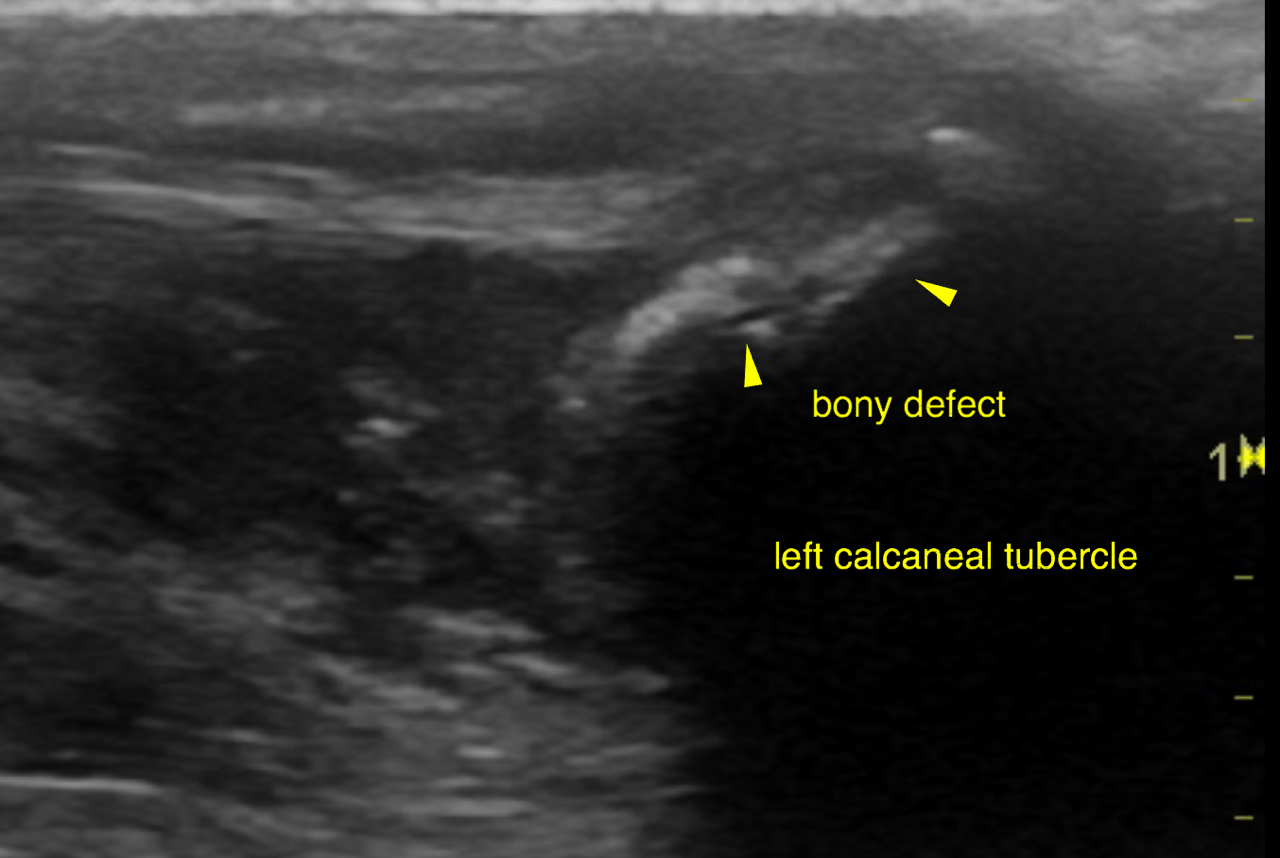
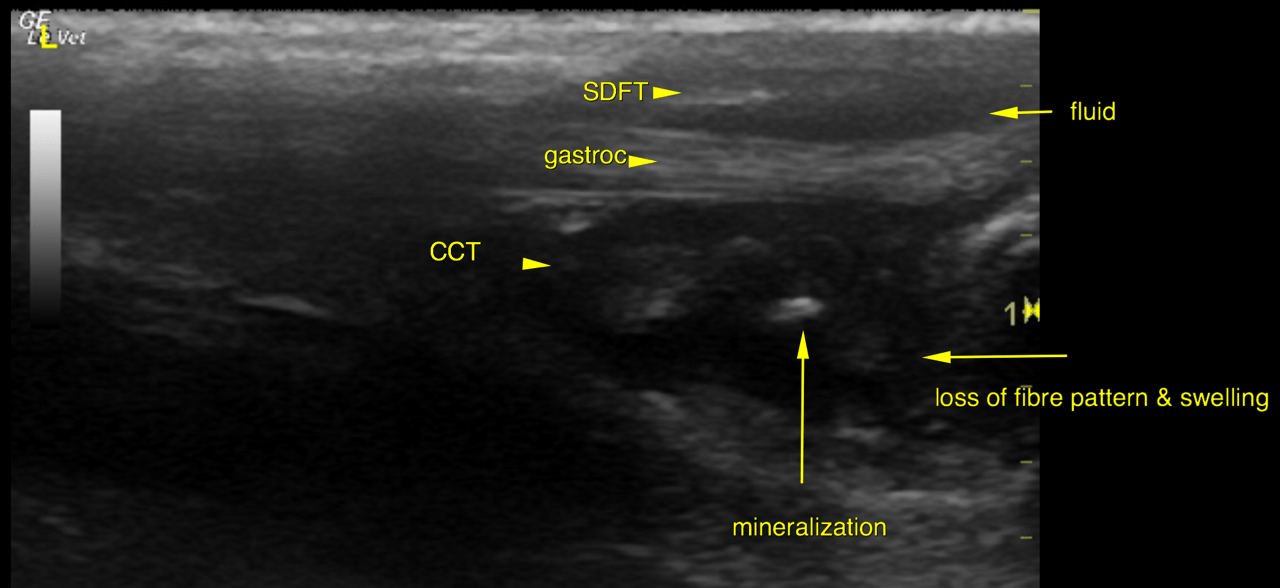
Ultrasound of the left and right calcanea tendons – Left:
Marked localized swelling at a diameter of 1 cm with fibre disruption is noted for the
common calcaneal tendon next to its calcaneal insertion. The affected region spans a
maximum of 2 cm immediately next to the calcaneal tubercle. The affected tissue
reveals marked heterogeneity with an overall decrease in echogenicity and small
isolated osseous fragments. The bone surface of the calcaneal tubercle presents an
irregular concave defect. Small amounts of fluid are noted between the superficial and
deep components of the calcaneal tendon. The calcaneal bursa is mildly distended. A
generalized cutaneous swelling is present too.
The gastrocnemius tendon is within normal limits. The SDFT presents no
abnormalities.
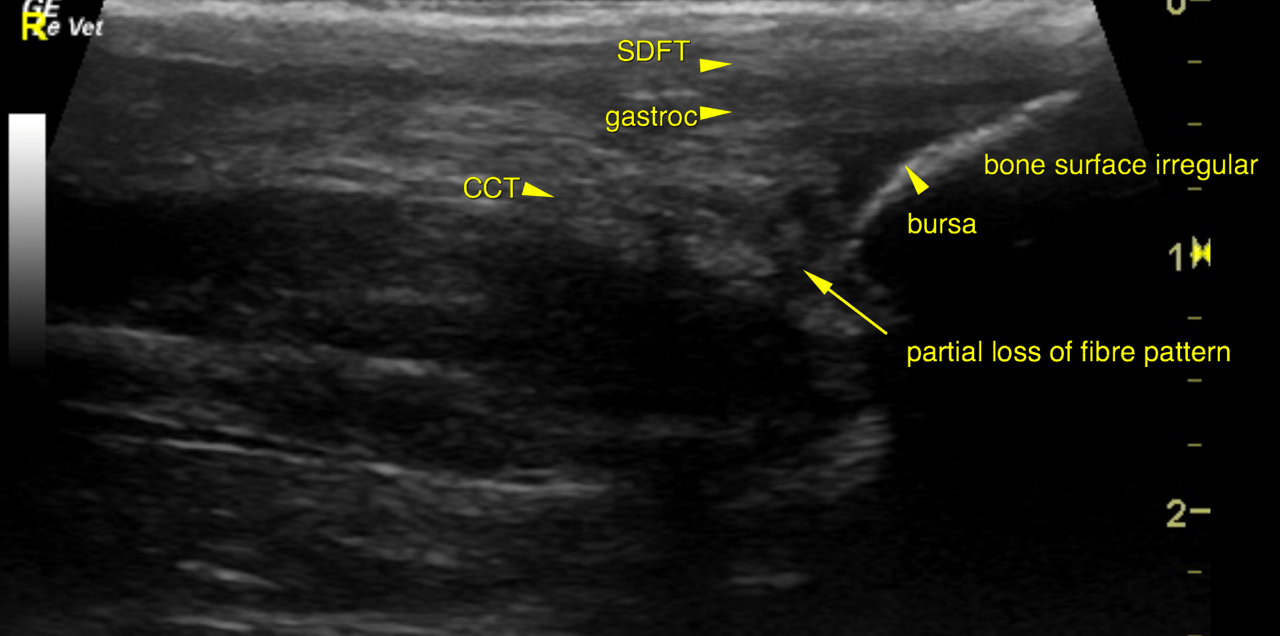
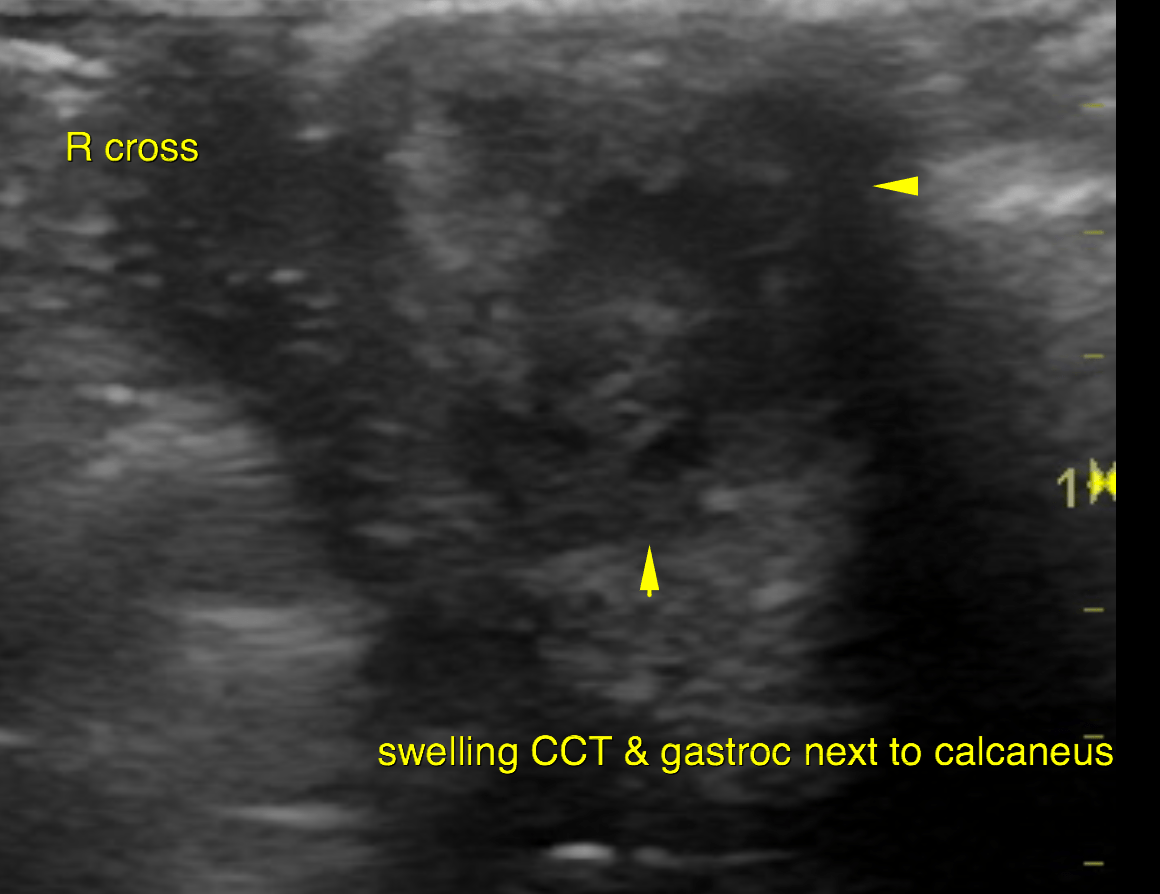
Right:
Sublte localized swelling measuring 0.5 cm is noted at the common calcaneal tendon
and gastrocnemius tendon next to their calcaneal insertion. The affected region spans a
maximum of 0.5 cm next to the calcaneal tubercle. The affected tissue reveals an
overall decrease in echogenicity with partial fibre disruption. The bone surface of the
calcaneal tubercle presents is mildly irregular in outline. The calcaneal bursa is mildly
distended. A mild generalized cutaneous swelling is present too.
The SDFT presents no abnormalities.
Left: At this relatively advanced stage response to conservative management is unlikely.
Successful healing requires temporary fixation.
Ultrasonographic monitoring of the tendon healing should be considered. Restoration
of longitudinal fibres should be ensured before the fixation is discontinued.
Right: The ultrasonographic findings are compatible with partial rupture of the deep calcaneal
tendon – smaller portions of the gastrocnemius and common calcaneal tendon are
affected respectively with mild secondary calcaneal modeling, cellulitis and bursitis.
The findings are mild and do not necessarily lead to biomechanical failure. This shoudl
be correlated with the clinical presentation to adjust the further management
adequately.
Next to traumatic injury consider systemic metabolic syndromes – such as diabetes
mellitus – or chronic degeneration as underlying diseases, escpecially with bilateral
changes.