CT – Cervical disc protrusions and mild caudal cervical spondylomyelopathy in a 3 year old MN Australian Shepherd mix dog

Case Study

CT – Cervical disc protrusions and mild caudal cervical spondylomyelopathy in a 3 year old MN Australian Shepherd mix dog

This 3 year old MN Australian Shepherd mix dog presented for apparent pain of 2 months duration. Cries out with sudden movement, ambulates with head parallel to spine. Lays down while eating. 

Physical exam: Hopping and CPs normal. No palpable pain
This 3 year old MN Australian Shepherd mix dog presented for apparent pain of 2 months duration. Cries out with sudden movement, ambulates with head parallel to spine. Lays down while eating. 

Physical exam: Hopping and CPs normal. No palpable pain
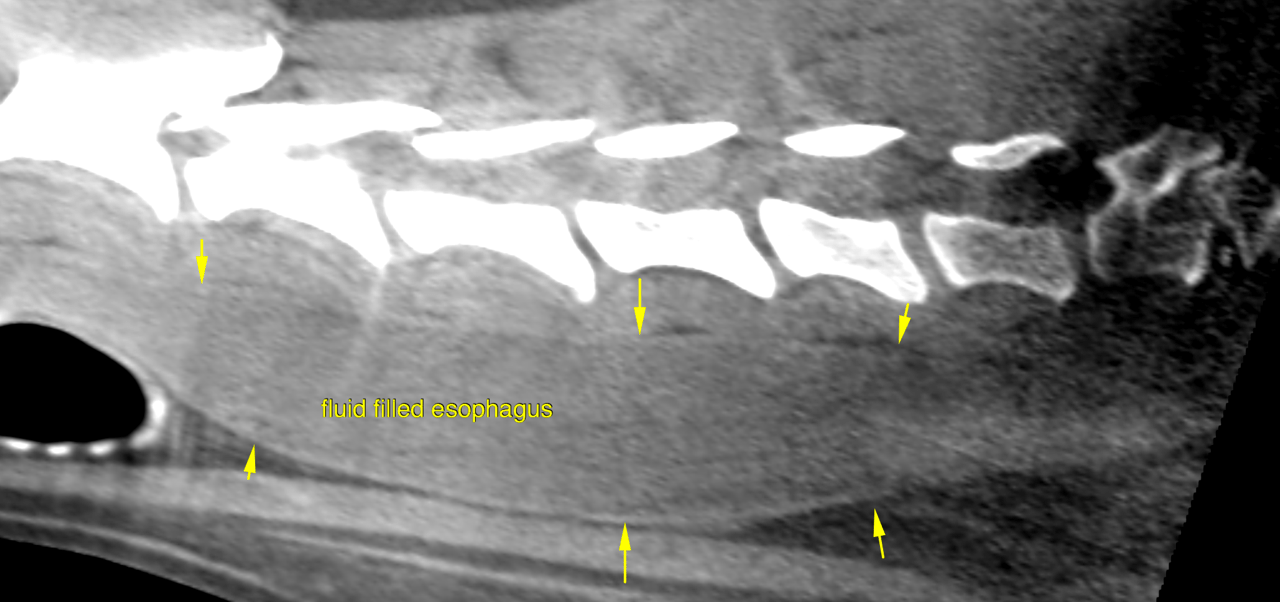
Image Interpretation

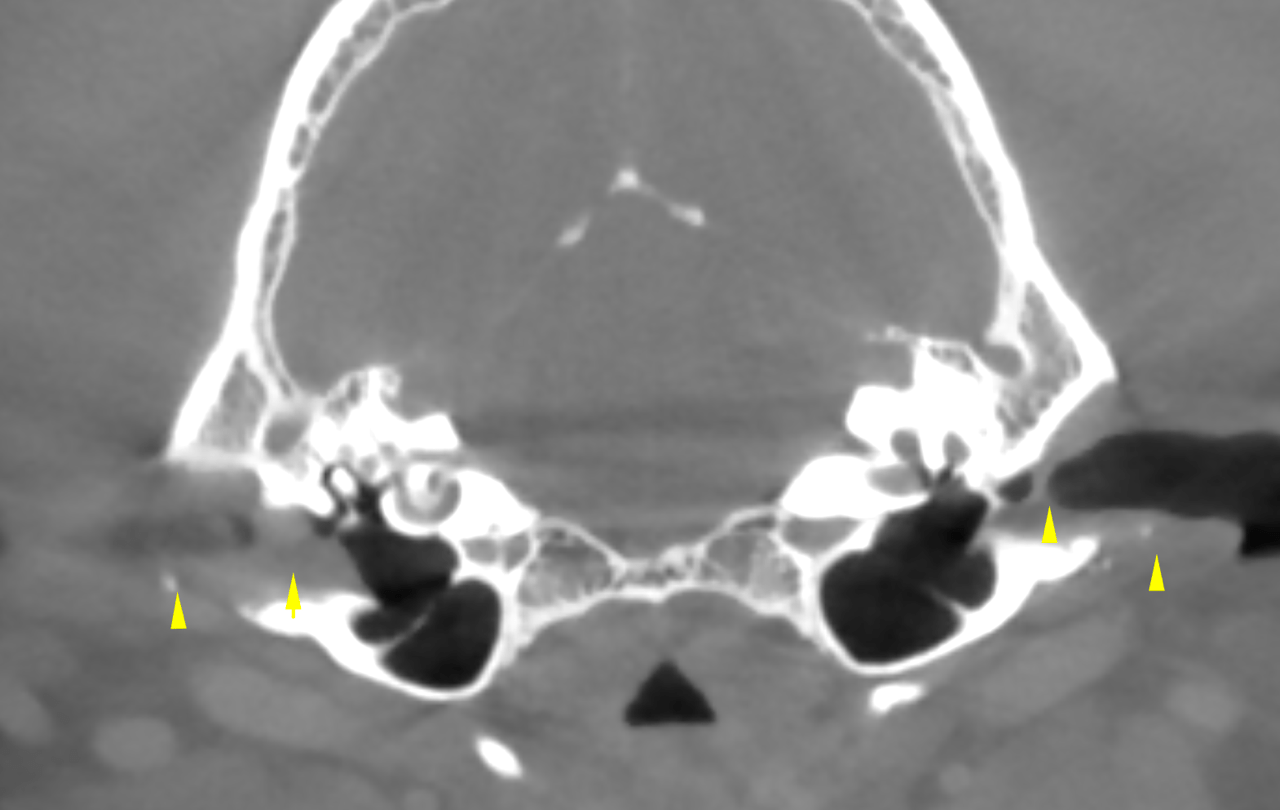
CT of the head and cervical spine, plain and post contrast – Except for bilateral signs of mild chronic otitis externa the computed tomography of
the head is within normal limits.
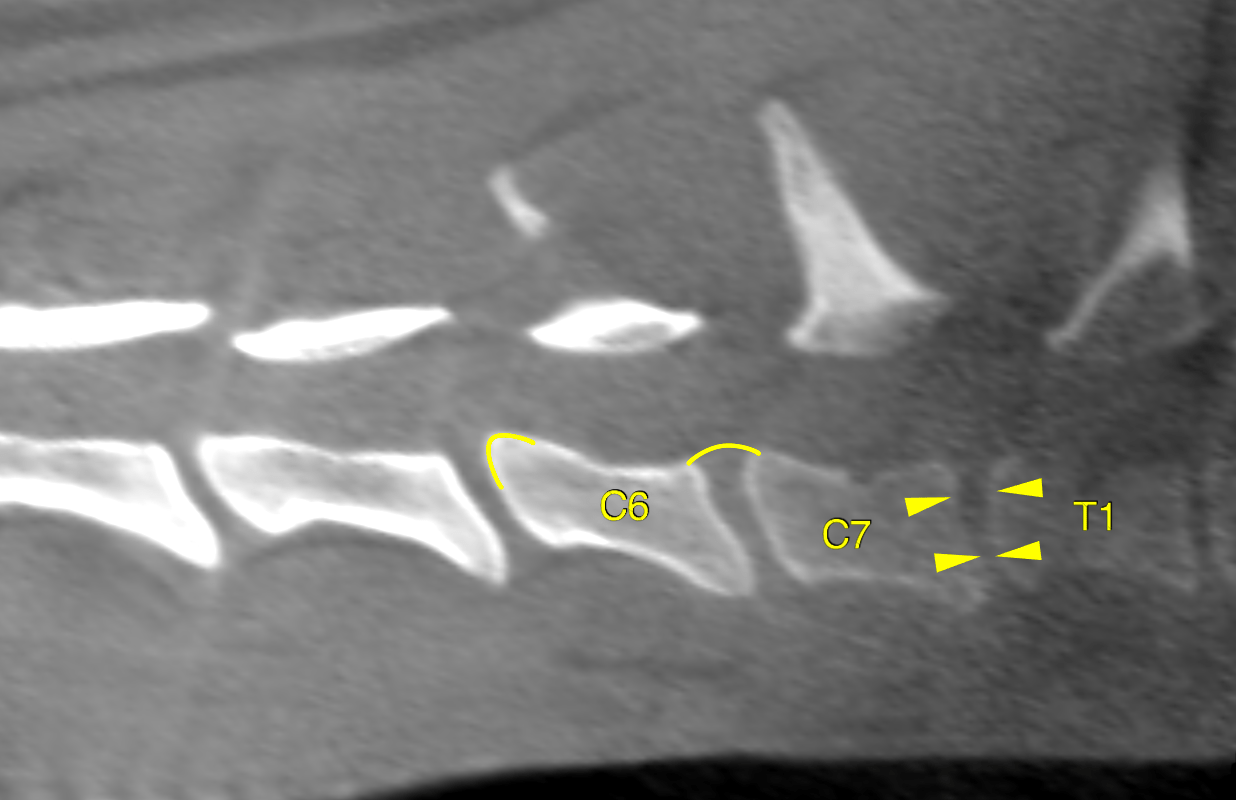
Mild intervertebral disc protrusions are noted at the disc spaces C5/6, C6/7 and C7/T1.
The ventral epidural space is partially occupied respectively.
The dorsal and lateral epidural space is maintained throughout. No spinal cord
displacement or compression is noted with the neutral position of the cervical spine
here.
The cranial endplate of C6 presents mild dorsal tipping and ventral flattening. There is
a mild step formation of the vertebral canal floor noted level with the cranial endplate
of C6.
The disc space C7/T1 reveals mild wedge shaped narrowing.
There is no evidence of discospondylitis.
Moderate generalized dilation with fluid content is noted throughout the cervical
esophagus, which is likely to be related to the general anesthesia.

DX

Mild caudal cervical disc protrusions without compressive myelopathy in neutral position - Possible mild caudal cervical spondylomyelopathy - Mild bilateral chronic otitis externa

Outcome

Pain related to dynamic spinal cord compression is conceivable in this patient.
High volume surgical disc herniation and discospondylitis can be ruled out as
underlying causes to the clinical signs.
Direct visualization of dynamic spinal cord compression, low volume disc extrusion,
spinal cord infarction or meningomyelitis would warrant further imaging.
An MRI, CT myelogram or dynamic radiographic myelogram plus examination of
CSF may be considered in case further definition is strived.
Bilateral ostoscopic examination is recommended.
Rule out clinical signs of megaesophagus. Obtain radiographs in case of doubt only.

Patient Information

Patient Name : Big Stan Durant/Neel VH
Gender : Male, Neutered
Species : Canine
Type of Imaging : Ultrasound
Status : Complete
Liz Wuz Here : Yes

Clinical Signs

  • Decreased mobility
  • Pain

Images

bildschirmfoto_2016-02-04_um_11bildschirmfoto_2016-02-04_um_11bildschirmfoto_2016-02-04_um_12

Clinical Signs

  • Decreased mobility
  • Pain
Skip to content