Intracardiac mass associated with the triscupid valve in a 8 year old MN Golden Retriever dog

Case Study

Intracardiac mass associated with the triscupid valve in a 8 year old MN Golden Retriever dog

Patient is an 8 year old MN Golden Retriever dog who presented with heavy breathing/panting for the last 2-3 days. Owner has noticed a “pounding heart” when the dog goes out or eats. Physical exam – HR 180, bilateral heart murmur

Chest rads show globoid heart
Patient is an 8 year old MN Golden Retriever dog who presented with heavy breathing/panting for the last 2-3 days. Owner has noticed a “pounding heart” when the dog goes out or eats. Physical exam – HR 180, bilateral heart murmur

Chest rads show globoid heart
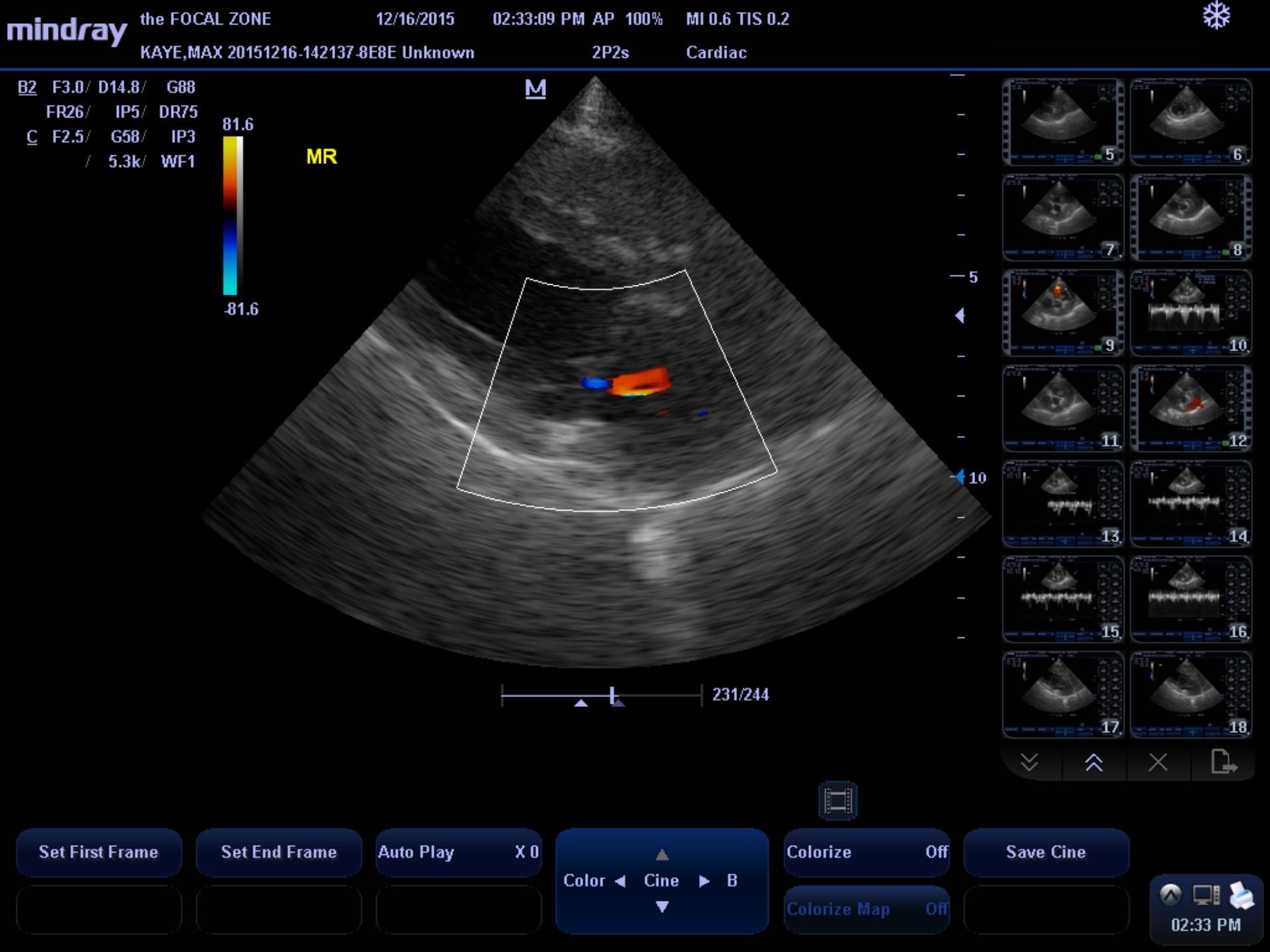
Image Interpretation

Subjectively, there is decreased systolic function and abnormal motion of the IVS. The left ventricle
measures normally with low normal systolic function. The left atrium is high normal in size, subjectively (La:Ao 1.40).
The right ventricular chamber is enlarged. The RA appears mildly enlarged with septal bowing to the left. The MV and
AV are WNL. Color and Spectral Doppler identifies trivial mitral regurgitation. Spectral Doppler identifies mildly
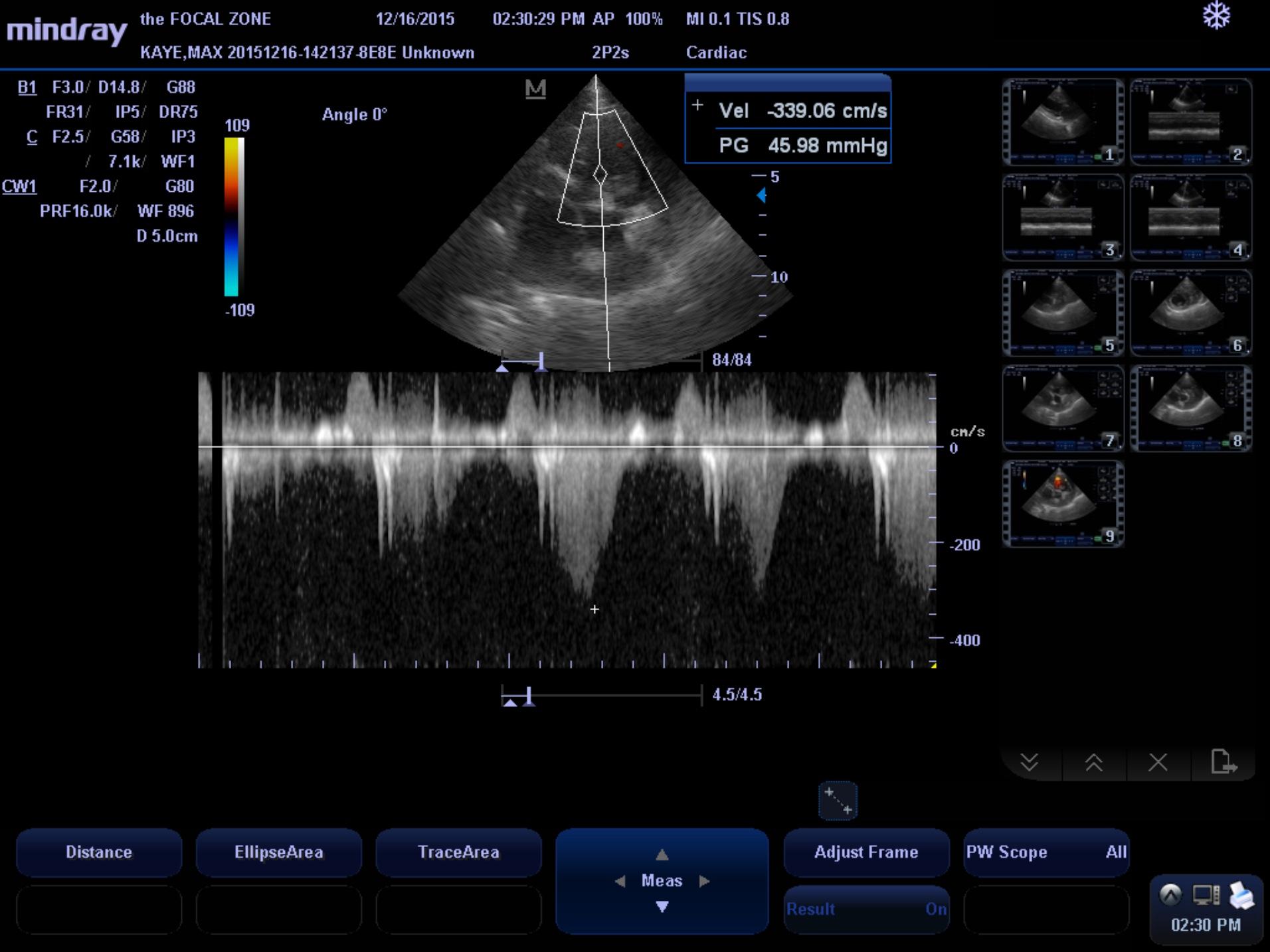
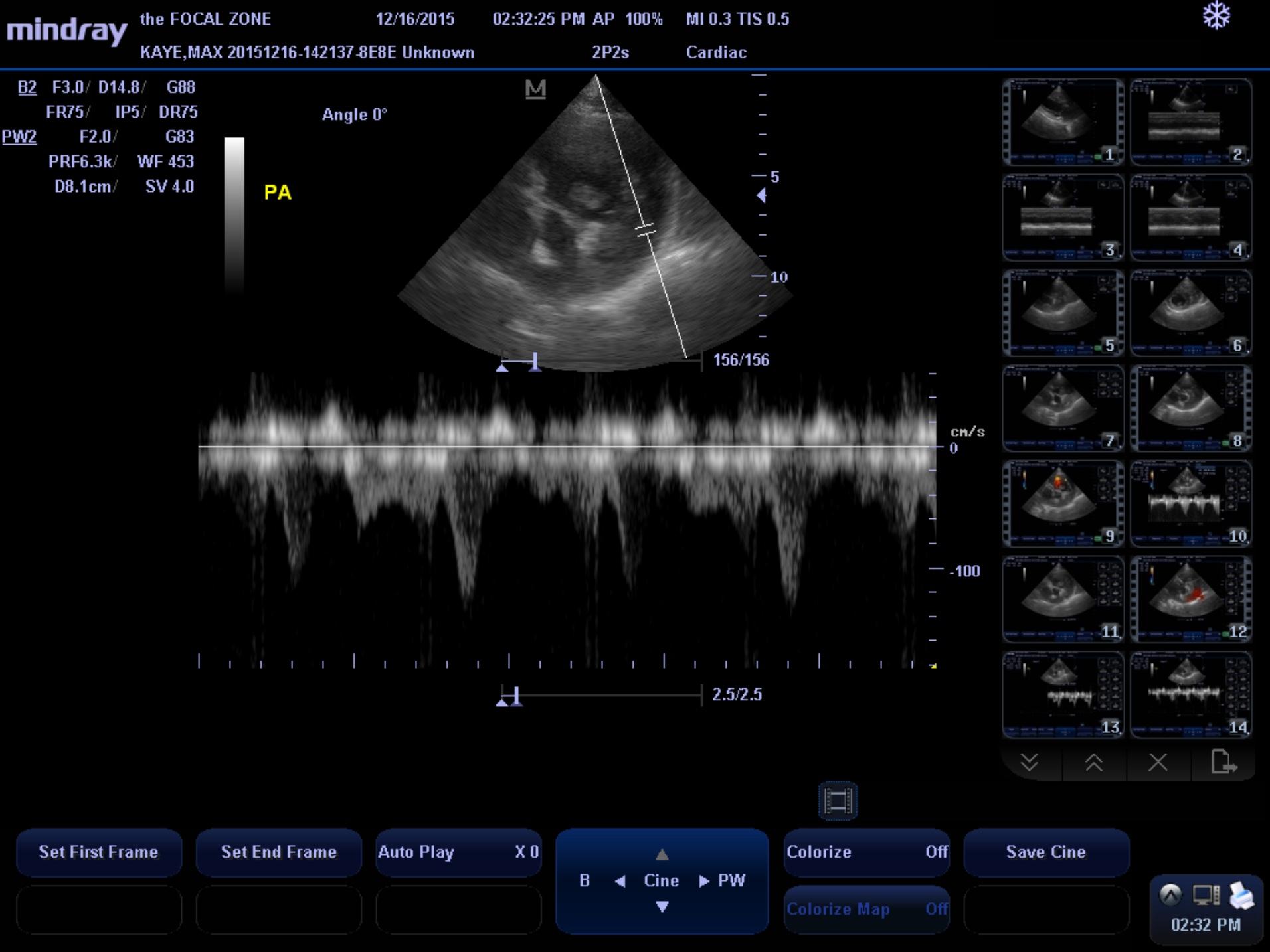
elevated peak TR (in combination with RAE suggests moderate obstruction to flow vs. PHT). There is a large,
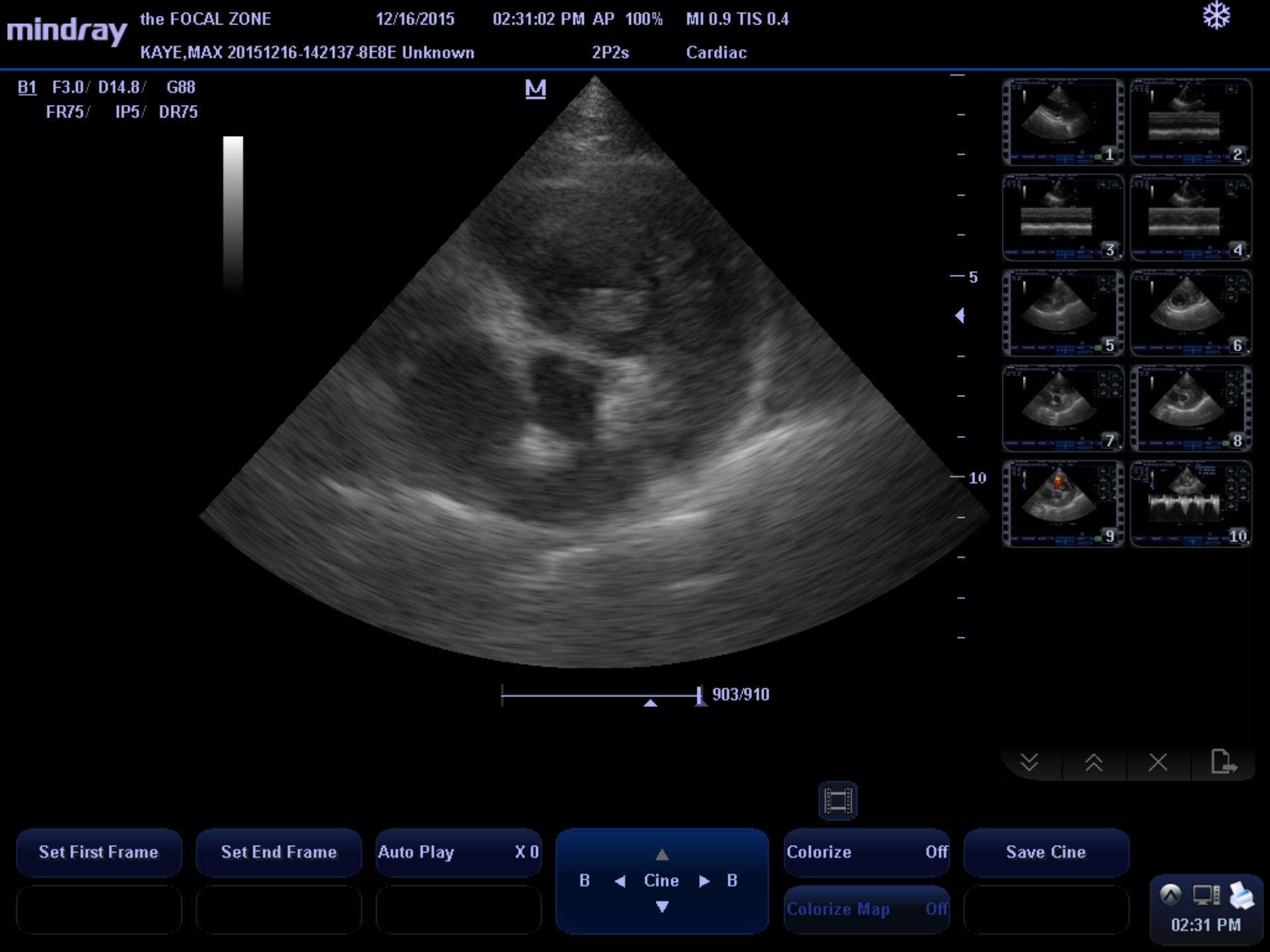
rounded, moveable, multilobular mass associated with the TV and occupying the majority of the body of the RV and
RVOT. The mass appears to be causing some obstruction to flow into the PA (RVOT 1.96m/s, PA 1.20m/s). No
effusions visualized.
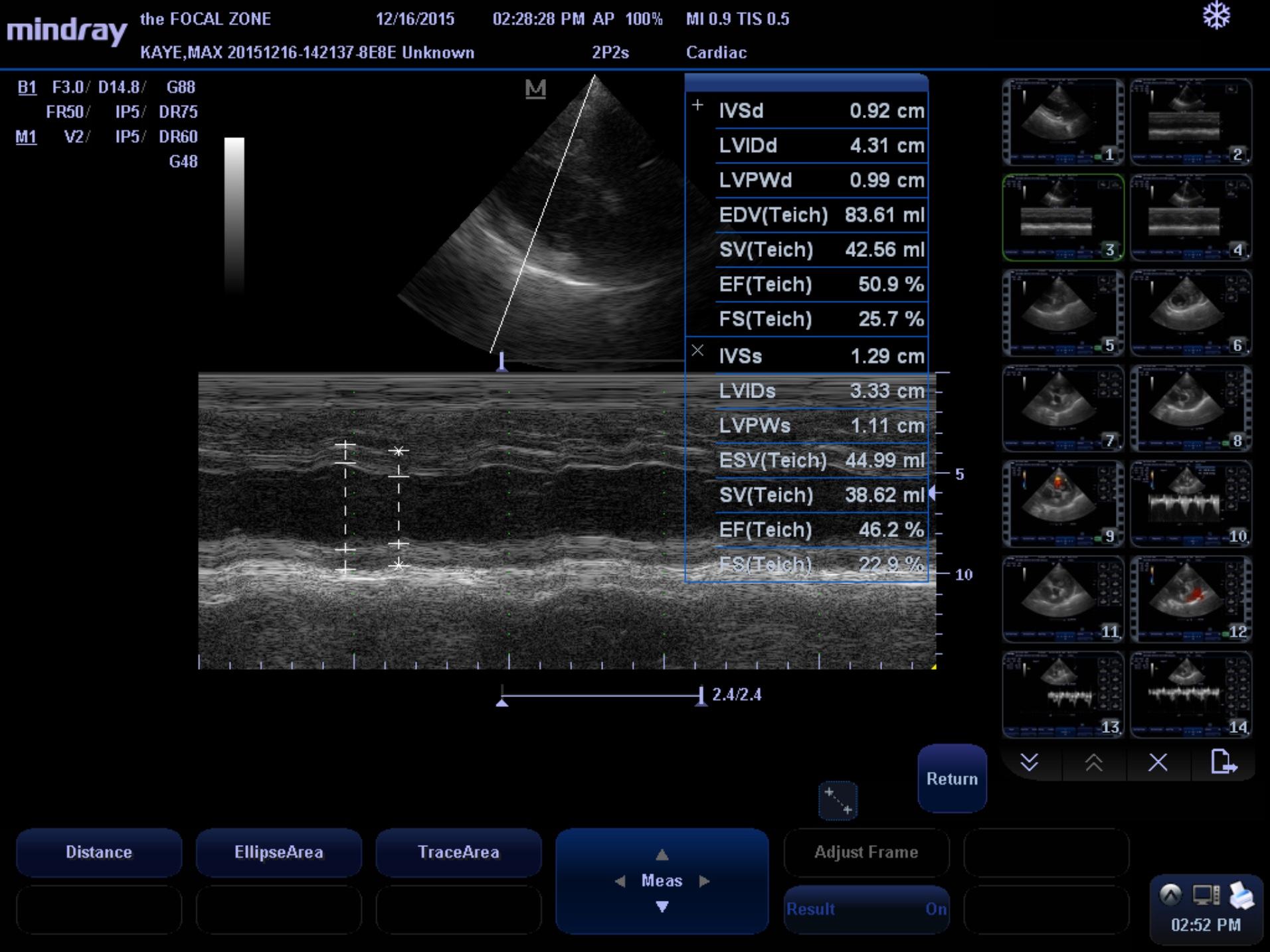
IVDd – 0.99cm
LVIDd – 4.19cm
LVFWd – 1.05cm
IVDs – 1.60cm
LVIDs – 3.20cm
LVFWs – 1.36cm
FS – 23.5%

DX

Large intracardiac mass associated with the TV and obstructing outflow to the lungs

Outcome

Unfortunately, this patient has a large intracardiac mass associated with the TV
which is occupying the majority of the right heart. There is evidence of this mass causing a moderate
obstruction to blood flow out of the heart into the lungs and it is safe to assume the mass is preventing
normal diastolic function as well. The LV systolic function is also decreased, secondary to ventricular
interdependence and very poor IVS function.
A tissue sample is required to determine the underlying nature of this tumor, however the location and
appearance of this type of mass would be consistent with a myxoma or a sarcoma.
Unfortunately, this patient’s clinical signs are secondary to poor cardiac output due to the mass obstructing
normal blood flow. Medical therapy is not expected to improve cardiac output due to the nature of the
problem. Lasix is contraindicated and is expected to cause further decompensation. Surgery is not an option
due to the large size of the tumor and poor function of both the RV and LV.
The recommendations is consideration of humane euthanasia the clinical signs are expected to progress.
Intravenous fluids may provide short-term improvement via increasing circulating volume and cardiac
output, however ascites and pleural effusion are possible.
Recheck thoracic radiographs if the respiratory signs continue to progress.

Patient Information

Patient Name : Max Kaye
Gender : Male, Neutered
Species : Canine
Type of Imaging : Ultrasound
Status : Complete
Liz Wuz Here : Yes

Clinical Signs

  • Panting

Exam Finding

  • Heart Murmur
  • Panting

Images

max1max2max3max4max5

Clinical Signs

  • Panting
Skip to content