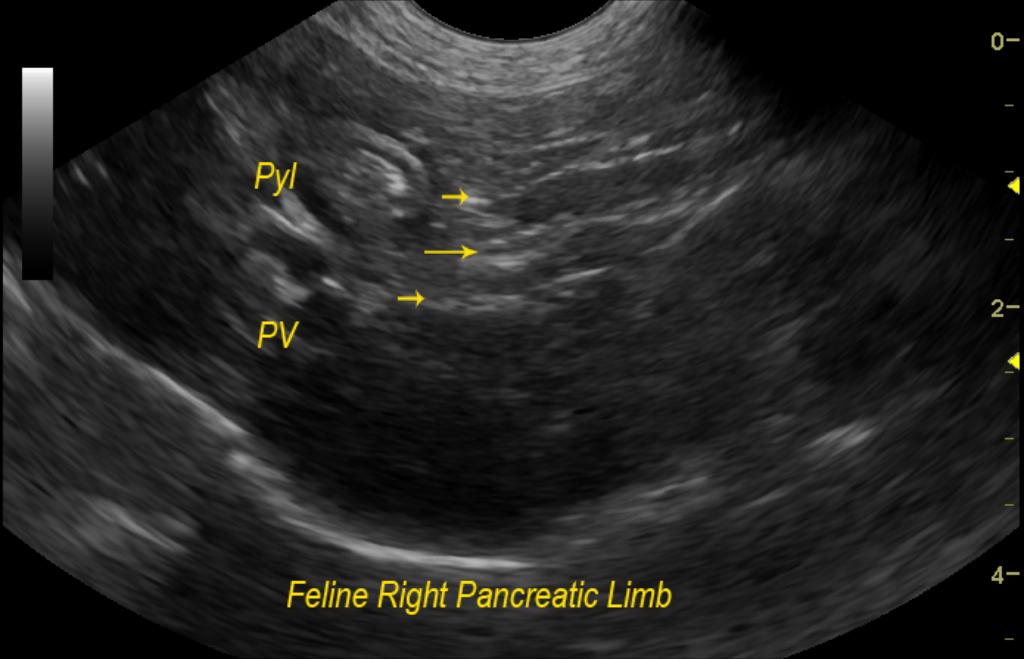
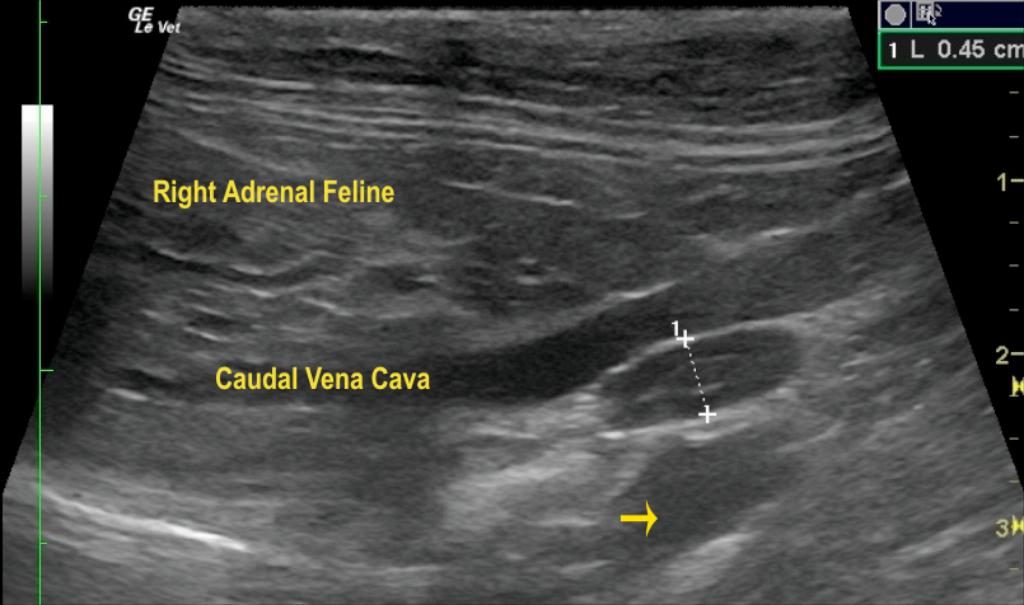
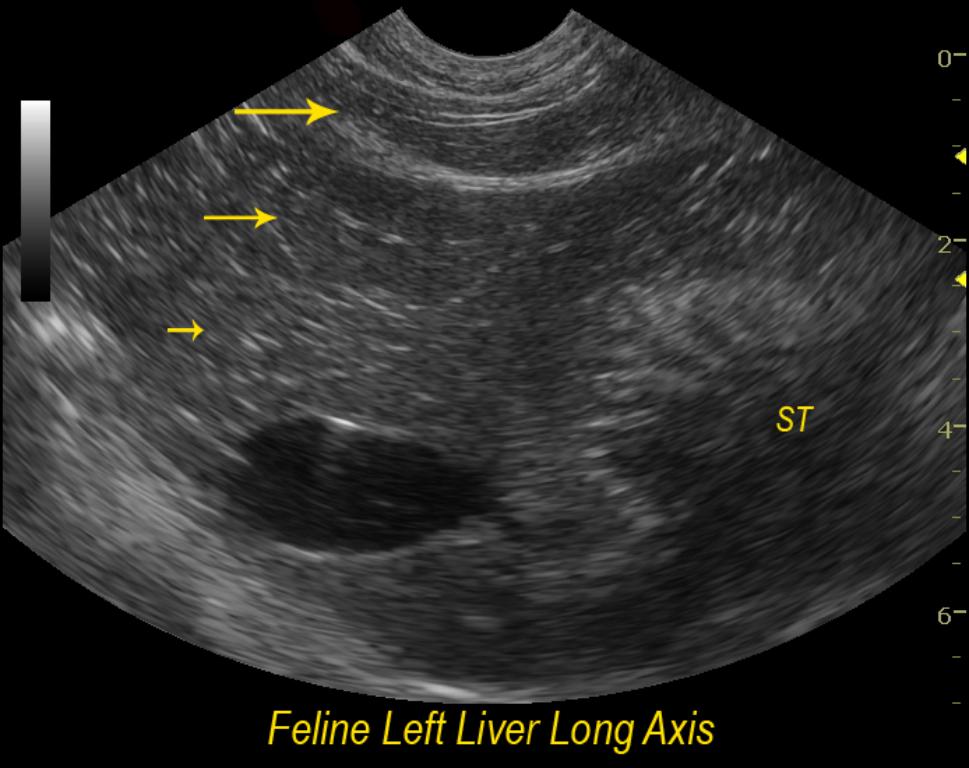
A consistently systematic approach to every sonogram is essential for the clinical sonographer to ensure that all lesions and normal presentations are visualized, imaged, and captured electronically for review. At SonoPath we always start at the urinary bladder and pelvic urethra in every animal, since pathology usually does not cause discomfort in this region (urinary tract obstruction excluded). This way we may gauge how the patient reacts to the scanning hand and then, when progressing counterclockwise to the cranial abdomen.
A consistently systematic approach to every sonogram is essential for the clinical sonographer to ensure that all lesions and normal presentations are visualized, imaged, and captured electronically for review. At SonoPath we always start at the urinary bladder and pelvic urethra in every animal, since pathology usually does not cause discomfort in this region (urinary tract obstruction excluded). This way we may gauge how the patient reacts to the scanning hand and then, when progressing counterclockwise to the cranial abdomen. With this approach we will have imaged half of the patient prior to scanning organ systems and regions that often host painful pathology such as is seen with pancreatitis, gastritis, cholecystitis and paralumbar spasm at the T-L junction. This approach minimizes the time required to scan a restless or agitated patient and allows the sonographer to detect pain from the patient as they react to the scanning hand when compared to how they react in the painless caudal abdomen.
The images and efficiency clips shown here are just a handful of what is contained in SonoPath’s “Normal Echo & Abdominal Sonograms With Normal Age-Related Changes DVD” which can be found on our Products page.