A 9-year-old neutered male Shetland Sheep dog was presented for evaluation of urine dribbling urine and hematuria.
A 9-year-old neutered male Shetland Sheep dog was presented for evaluation of urine dribbling urine and hematuria.
Case Study
Transitional cell carcinoma of the trigone and prostate is suspected in a 9 year old MN Shetland Sheepdog with hematuria
Sonographic Differential Diagnosis
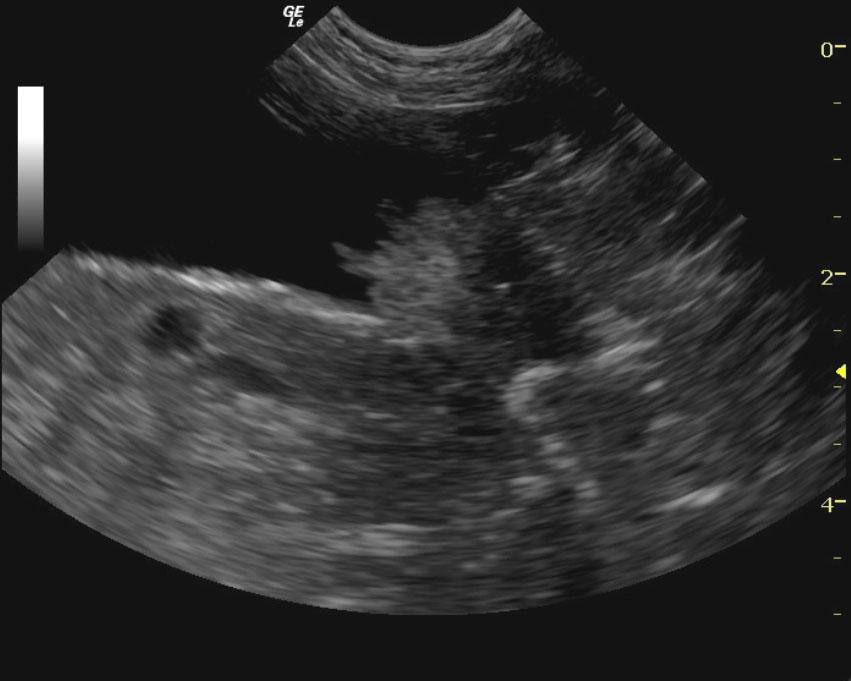
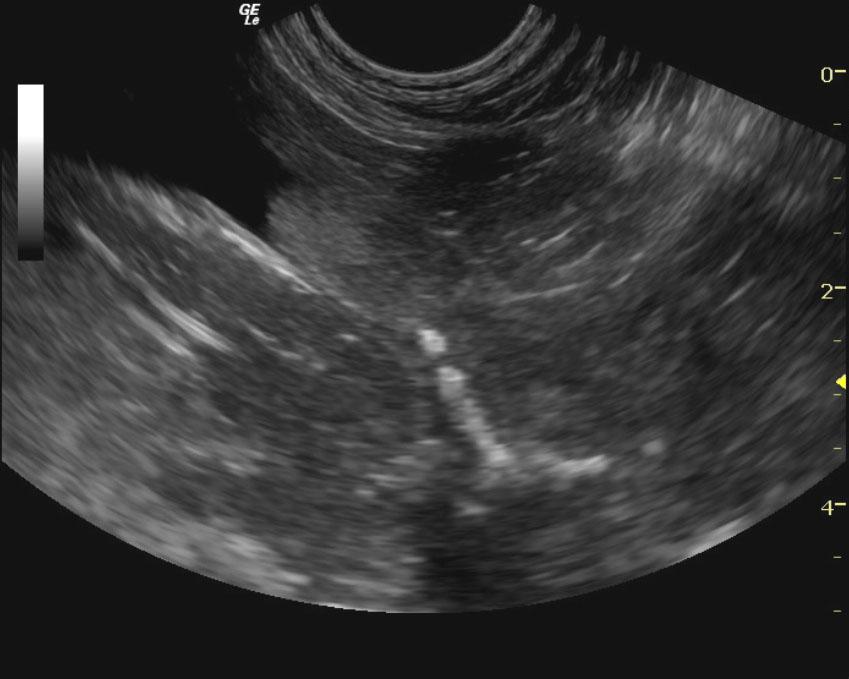
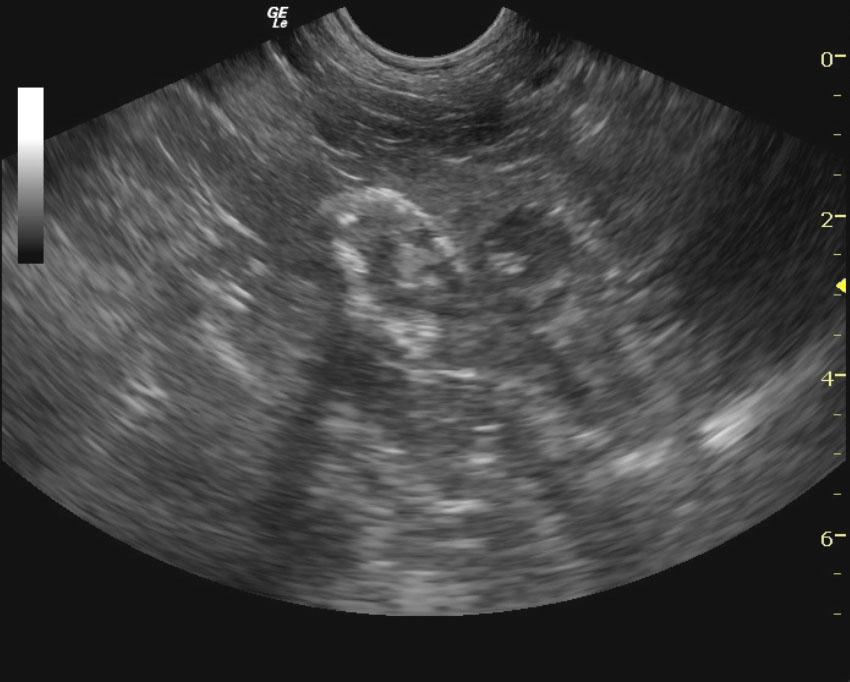
The mineralizing prostatic mass enters into the urethra, which is suggestive of transitional cell carcinoma or prostatic carcinoma. Ultrasound-guided FNA of the prostate or ultrasound-guided traumatic catheterization would be recommended. Eventual urethral stent placement can also be considered, which would allow for interventional radiology and chemotherapy (via fluoroscopy at an interventional radiology facility).
Image Interpretation
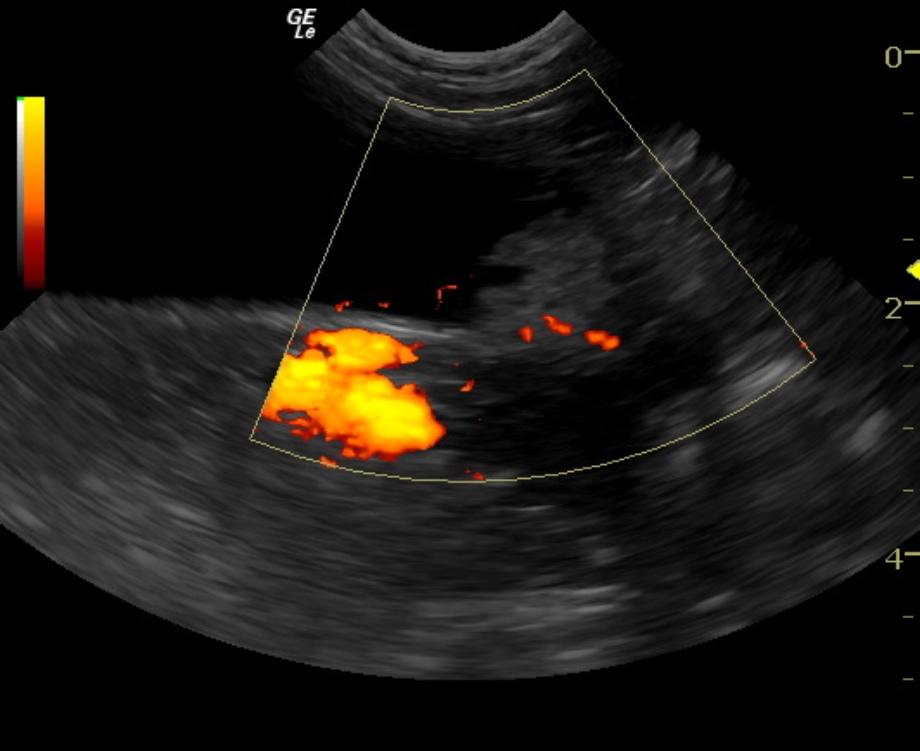
The urinary bladder in this patient was normal cranial to the cystourethral junction. However, a mass was noted in the proximal urethra, which is consistent with transitional cell carcinoma. The mass also involved the prostate and measured 3.25 x 2.76 cm. It was difficult to ascertain whether the mass is deriving from the prostate or urethra. Power Doppler flow signals were significant in this patient, which is suggestive of increased vascularity of the mass.
DX
Prostatic mass and urethra, mineralizing. Prostatic carcinoma vs transitional cell carcinoma
Outcome
The patient was euthanized.
Clinical Differential Diagnosis
Bladder disease – neoplasia, uroliths, cystitis. Prostatic disease – neoplasia, abscess. Urethral disease – neoplasia, uroliths, granulomatous reaction.
Sampling
None. However, ultrasound-guided traumatic catheterization or FNA would be warranted for a tissue diagnosis. (In my experience, no overt tissue seeding of neoplastic cells has occurred with this procedure.)
Video
Patient Information
Patient Name :
Copper H
Gender :
Male, Neutered
Species :
Canine
Type of Imaging : Ultrasound
Status :
Complete
Liz Wuz Here :
Yes
Code :
06_00105
Clinical Signs
- Hematuria
- Incontinence
Images

Clinical Signs
- Hematuria
- Incontinence